jamunjar-logo
whatsapp
cartmembermenu
Search for
"test & packages"
"physiotherapy"
"heart"
"lungs"
"diabetes"
"kidney"
"liver"
"cancer"
"thyroid"
"bones"
"fever"
"vitamin"
"iron"
"HTN"

CA15.3

Cancer
image

Report in 4Hrs

image

At Home

nofastingrequire

No Fasting Required

Details

CA 15-3 is a glycoprotein antigen shed by breast cancer cells, particularly in invasive ductal carcinoma

4991,210

59% OFF

FREE:

Ai Insights

CA15.3 (Cancer Antigen 15.3) - Comprehensive Medical Test Guide

  • Why is it done?
    • CA15.3 is a tumor marker protein produced by cancer cells, primarily used to monitor and assess breast cancer progression and treatment response
    • Primary reasons for ordering include: monitoring patients with known breast cancer metastasis, assessing treatment efficacy in advanced breast cancer, detecting cancer recurrence after initial treatment, and evaluating patients with suspicious clinical findings
    • NOT recommended for screening asymptomatic women or as a primary diagnostic test for breast cancer
    • Typically performed at baseline before treatment initiation, then at regular intervals (every 3-6 months) during surveillance and treatment monitoring
    • Can also be used for monitoring ovarian cancer, endometrial cancer, and other adenocarcinomas, though less specific for these malignancies
  • Normal Range
    • Normal/reference range: Less than 30-35 U/mL (units per milliliter) - most laboratories use a cutoff of 30 U/mL as the upper limit of normal
    • Negative/Normal: Values ≤30 U/mL indicate no significant elevation; however, normal values do not exclude cancer
    • Borderline/Mild elevation: 30-50 U/mL requires correlation with clinical findings and may warrant repeat testing
    • Positive/Significant elevation: >50 U/mL suggests possible malignancy or metastatic disease; higher values (>100 U/mL) are more specific for advanced disease
    • Very high levels (>200 U/mL) typically correlate with substantial tumor burden and more advanced disease
    • Unit of measurement: U/mL (Units per milliliter) - also may be expressed as nanograms per milliliter (ng/mL) depending on laboratory methodology
    • Important: Reference ranges vary slightly between laboratories based on assay methodology; always consult your laboratory's specific reference range
  • Interpretation
    • Baseline elevation (>30 U/mL) in untreated patient: Suggests possible metastatic disease or advanced cancer; requires confirmation with imaging studies and clinical assessment
    • Rising trend during treatment: Progressive increase (>25% from baseline) suggests disease progression or treatment failure; may indicate need for therapeutic modification
    • Declining trend during treatment: Decrease of 50% or more suggests positive treatment response and tumor burden reduction
    • Stable values: When values remain relatively constant, indicates stable disease; typical target in advanced cancer management
    • Rise after normalization: In post-treatment surveillance, increase above normal range suggests disease recurrence; may precede radiological findings by weeks to months
    • Factors affecting CA15.3 levels:
    • Benign breast disease (fibroadenomas, cysts, inflammation)
    • Hepatic/liver disease (cirrhosis, hepatitis)
    • Autoimmune disorders and rheumatological conditions
    • Other malignancies (ovarian, endometrial, pancreatic, lung cancers)
    • Pregnancy and postpartum period
    • Hormone replacement therapy (HRT) may cause mild elevation
    • Recent chemotherapy (temporary elevation possible due to cell death and marker release)
    • Clinical significance:
    • Sensitivity for metastatic breast cancer ranges from 50-80%; approximately 50-60% of patients with metastatic disease have elevated CA15.3
    • Specificity for breast cancer is approximately 85-95%, meaning elevated levels are reasonably specific but not diagnostic alone
    • Most valuable in serial monitoring - trend analysis is more informative than single values
    • Not useful for early detection - insufficient sensitivity in early-stage disease and significant false-positive rate in healthy population
  • Associated Organs
    • Primary organ system: Breast tissue (mammary gland); also produced by epithelial cells in various organs
    • Breast cancer: Most common indication; elevated in 40-80% of metastatic cases but usually normal in early-stage disease
    • Common sites of metastasis associated with CA15.3 elevation:
    • Bone metastases (most common) - often produces highest CA15.3 levels
    • Liver metastases - frequently associated with significant elevation
    • Lung and pleural involvement
    • Lymph node involvement
    • Brain and CNS metastases (less commonly associated with elevation)
    • Other malignancies with potential elevation:
    • Ovarian cancer (elevated in 20-50% of cases)
    • Endometrial cancer
    • Pancreatic cancer
    • Lung cancer (particularly adenocarcinoma)
    • Gastric and colorectal cancers
    • Benign conditions associated with elevation:
    • Hepatic cirrhosis and chronic liver disease - significant source of false positives
    • Systemic lupus erythematosus (SLE) and rheumatoid arthritis
    • Benign breast disease and fibrocystic changes
    • Complications and clinical risks of abnormal results:
    • Diagnostic delays if elevated levels are misinterpreted as definitive cancer diagnosis without confirmatory imaging
    • Unnecessary anxiety in patients with benign elevations
    • Risk of overtreatment or inappropriate therapeutic modifications based on single isolated elevation
    • Disease progression may occur with normal CA15.3 levels, leading to false reassurance
  • Follow-up Tests
    • Imaging studies for elevated CA15.3:
    • Chest CT (computed tomography) - to evaluate for pulmonary and mediastinal metastases
    • Abdominal/pelvic CT - to assess liver, peritoneal, and abdominal involvement
    • Bone scan or PET-CT - to evaluate for osseous metastases, particularly when CA15.3 is markedly elevated
    • MRI (brain) - when CNS metastases are clinically suspected
    • Laboratory tests for comprehensive evaluation:
    • Liver function tests (AST, ALT, alkaline phosphatase, bilirubin) - to assess hepatic involvement
    • Renal function tests (creatinine, BUN) - baseline before targeted therapy initiation
    • Complete blood count (CBC) - to evaluate bone marrow involvement and treatment tolerance
    • Other tumor markers (CEA, CA27.29, HER2 status) - complementary markers for breast cancer assessment
    • Tumor genetic testing (if not previously done) - for guiding targeted therapy decisions
    • Monitoring schedule for known metastatic disease:
    • Every 4-8 weeks during active chemotherapy or targeted therapy - closer intervals for treatment adjustments
    • Every 8-12 weeks during maintenance therapy or hormonal treatment
    • Every 3-6 months during surveillance phase after treatment completion
    • Complementary tumor markers:
    • CA27.29 - alternative breast cancer marker; may be more sensitive in some patients
    • CEA (carcinoembryonic antigen) - general cancer marker; elevated in breast cancer metastases
    • BRAF, ER/PR, and HER2 status - molecular profiling for treatment guidance
    • When to repeat CA15.3 testing:
    • Persistently abnormal - at next scheduled visit or within 2-4 weeks if clinical deterioration
    • Rising trend - repeat in 2-4 weeks to confirm progression before initiating therapy changes
    • Baseline elevation with nonspecific findings - repeat in 4-8 weeks to establish trend
  • Fasting Required?
    • Fasting requirement: NO - Fasting is not required for CA15.3 testing
    • CA15.3 can be measured at any time of day regardless of food or fluid intake
    • Food intake does not affect CA15.3 levels or assay accuracy
    • Medications: No specific medications need to be avoided for this test
    • Continue all regular medications as prescribed
    • Chemotherapy, hormone therapy, and targeted therapy do not interfere with CA15.3 assay
    • Patient preparation requirements:
    • Minimal preparation needed - routine venipuncture for blood draw
    • No specific positioning or positioning duration required before blood draw
    • Arrive well-hydrated to facilitate blood draw
    • Wear comfortable clothing with easily accessible arms for venipuncture
    • Inform phlebotomist of any bleeding disorders or medications affecting coagulation (anticoagulants, aspirin)
    • Timing considerations:
    • Test can be performed morning, afternoon, or evening
    • For serial monitoring, attempt to schedule testing at consistent times (morning preferred) to minimize variation
    • Avoid testing immediately after strenuous exercise, which may cause temporary elevation
    • Best to schedule testing at least 2 weeks after completing chemotherapy treatment cycle to allow marker stabilization

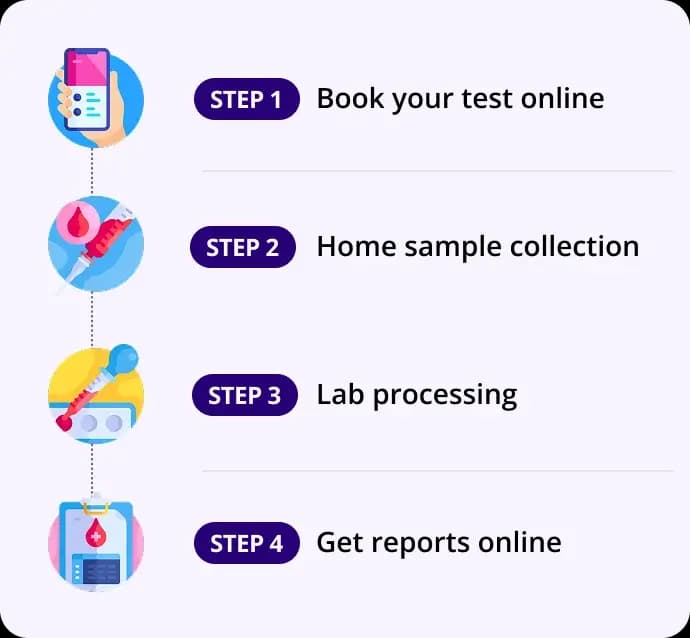
How our test process works!

customers
customers