


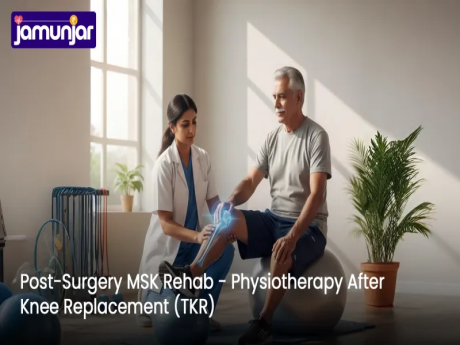
Summary:
This post explains why physiotherapy after knee replacement is essential, outlines a medically informed week-by-week rehabilitation timeline, compares clinic and home-based rehab, and provides long-term exercise guidance, all based on health guidelines and clinical evidence.
Introduction
A Total Knee Replacement (TKR) helps restore mobility and relieve chronic pain caused by advanced arthritis and joint degeneration. However, the surgical procedure addresses only the joint surfaces. Strength exercises: Focused on the quadriceps, hamstrings, and hip stabilizing muscles to support knees. Strength, ROM, walking, and ADLs can be greatly restored with the assistance of structured and scientifically proven physiotherapies. Early rehabilitation following knee replacement, using physiotherapy, is recommended in the guidelines provided by the United Kingdom’s National Institute for Health and Care Excellence.
The rehabilitation can be done in outpatient facilities or through physiotherapy at home. Increasingly, patients also use a home physiotherapy booking app in India to maintain continuity of care and improve adherence.
Why Physiotherapy Is Essential After Knee Replacement
Physiotherapy is a critical part of postoperative management after TKR. Its purpose is to restore mobility, improve strength, and help patients return to independent function. NICE guidance advises that physiotherapy, beginning as early as possible after surgery, should include guidance on self-directed exercise programmes before discharge.
Strength, Mobility, Gait, Swelling Management
Post-operation procedures normally entail pain, swelling, and stiffness. These can be relieved through physiotherapy techniques that include:
Strength training: Targeting quadriceps, hamstrings, and hip stabilisers to support the knee joint. Evidence shows physiotherapy interventions improve physical function and range of motion in the short term.
Mobility exercises: Gentle exercises help prevent stiffness and encourage functional knee bending and straightening.
Gait retraining: This aims at correcting pathological walking patterns, which can result in some form of compensation and discomfort.
Swelling management: Elevation and guided movement reduce inflammation and pain.
Post-op Rehab Timeline: Week-by-week Expectations
Recovery progresses in phases. Individual outcomes vary based on age, health, surgical technique, and rehabilitation consistency.
0–2 Weeks: Early Mobilisation
The initial two weeks emphasize pain control and movement activation, and have the following aims:
- Begin assisted knee bending and straightening exercises.
- Perform gentle strengthening activities to activate quadriceps and calf muscles.
- Short, supported walking sessions with aid (walker or sticks).
Physiotherapy at this stage can be particularly effective when delivered by professionals in familiar home settings helping to reduce discomfort and risk of falls.
2–6 Weeks: Strength And Mobility Gains
Between weeks 2 and 6:
- Increase the range of motion and intensity of strengthening exercises.
- Practice sit-to-stand movements.
- Gradually reduce dependency on walking aids.
This can be achieved through better adherence and progress with the use of a physiotherapy at home app or an organized plan provided by a physiotherapy center in Mumbai, especially when outpatient visits are challenging.
6–12 Weeks: Advanced Functional Training
By weeks 6–12, rehabilitation becomes more goal-oriented:
- Balance and proprioception exercises to support dynamic movement.
- Stair climbing technique training.
- Longer walking distances and endurance activities.
Patients often find that structured physiotherapy at home in Hyderabad or other regions improve consistency and confidence during this phase.
In-clinic Vs Home Physiotherapy After TKR — Which Speeds Recovery?
Both clinic-based and home-based physiotherapy can be effective when guided by trained professionals. A UK-based study found that a structured home rehabilitation programme can be as effective as traditional clinic physiotherapy, provided there is supervision and appropriate exercise progression.
Safety, Supervision, Adherence
In-clinic physiotherapy allows access to specialist equipment, while home physiotherapy provides comfort, consistency, and convenience especially in early recovery. An option for physiotherapy at home in Delhi or other cities for patients in India will ensure that patients remain interested in their rehabilitation program, thereby contributing towards better long-term results.
Long-term Exercises For Full Recovery And Joint Protection
Long-term adherence to structured exercise helps protect the new joint and improves overall function.
Quadriceps, Hamstrings, Balance, Stair Training
But even after the initial recovery, the patient is encouraged to do further strength and function exercises, because:
- Quadriceps training: Important for knee extension control.
- Hamstring strengthening: Supports knee bending and dynamic control.
- Balance exercises: Reduce fall risk and improve confidence.
- Stair climbing drills: Functional training essential for daily life activities.
By following these exercises, even in case of a physiotherapy at home in Mumbai or simply through a physiotherapy app at home, one can ensure that their joints stay healthy and free from injuries that could result from compensation.
CTA: Book Musculoskeletal Physiotherapy At Home — Safe And Structured TKR Rehabilitation At Your Doorstep
Recovery after knee replacement surgery needs to be evidence-based, planned, and safe. Whether in a clinic visit or physiotherapy center in Mumbai, Delhi, and Hyderabad, professional supervision will ensure that there is progress and that knee mobilization targets are achieved.
Through the availability of home physiotherapy appointment applications in India, postoperative rehabilitation physiotherapy has become easier and more patient-friendly than ever for patients.
Medical Disclaimer
This article is for educational purposes only. It does not replace professional medical advice, diagnosis, or treatment. Always consult a qualified doctor or physiotherapist before starting, stopping, or changing any treatment for pain or medical conditions. Exercises should only be started after assessment and guidance from a qualified physiotherapist.
References
- F Fatoye, G Yeowell, J M Wright, T Gebrye. Does home-based rehabilitation work as well as physiotherapy after knee replacement? PubMed [Internet]. 2021 [Accessed Jan 2026]. Available from: https://pubmed.ncbi.nlm.nih.gov/33554305/
- National Institute for Health and Care Excellence (NICE). Quality Statement 5: Postoperative rehabilitation [Internet]. NICE; [Accessed Jan 2026]. Available from: https://www.nice.org.uk/guidance/qs206/chapter/Statement-5-Postoperative-rehabilitation
- National Institute for Health and Care Excellence (NICE). Total hip replacement and total knee replacement in adults (NG157) [Internet]. NICE; [Accessed Jan 2026]. Available from: https://www.nice.org.uk/guidance/ng157
- National Institute for Health and Care Research (NIHR). Knee replacements: Home-based rehabilitation as effective as physiotherapy [Internet]. NIHR; [Accessed Jan 2026]. Available from: https://evidence.nihr.ac.uk/alert/knee-replacements-home-based-rehabilitation-as-effective-physiotherapy/