

Understanding Metabolic Dysfunction: The Hidden Link Between Poor Metabolism, Diabetes, Cardiovascular Disease, and Fatty Liver Disease
Metabolic dysfunction is the silent engine driving three of today's most dangerous chronic diseases: type 2 diabetes, cardiovascular disease, and non-alcoholic fatty liver disease. This clinical guide explains the mechanisms, how these diseases amplify each other, and evidence-based strategies for prevention and management.
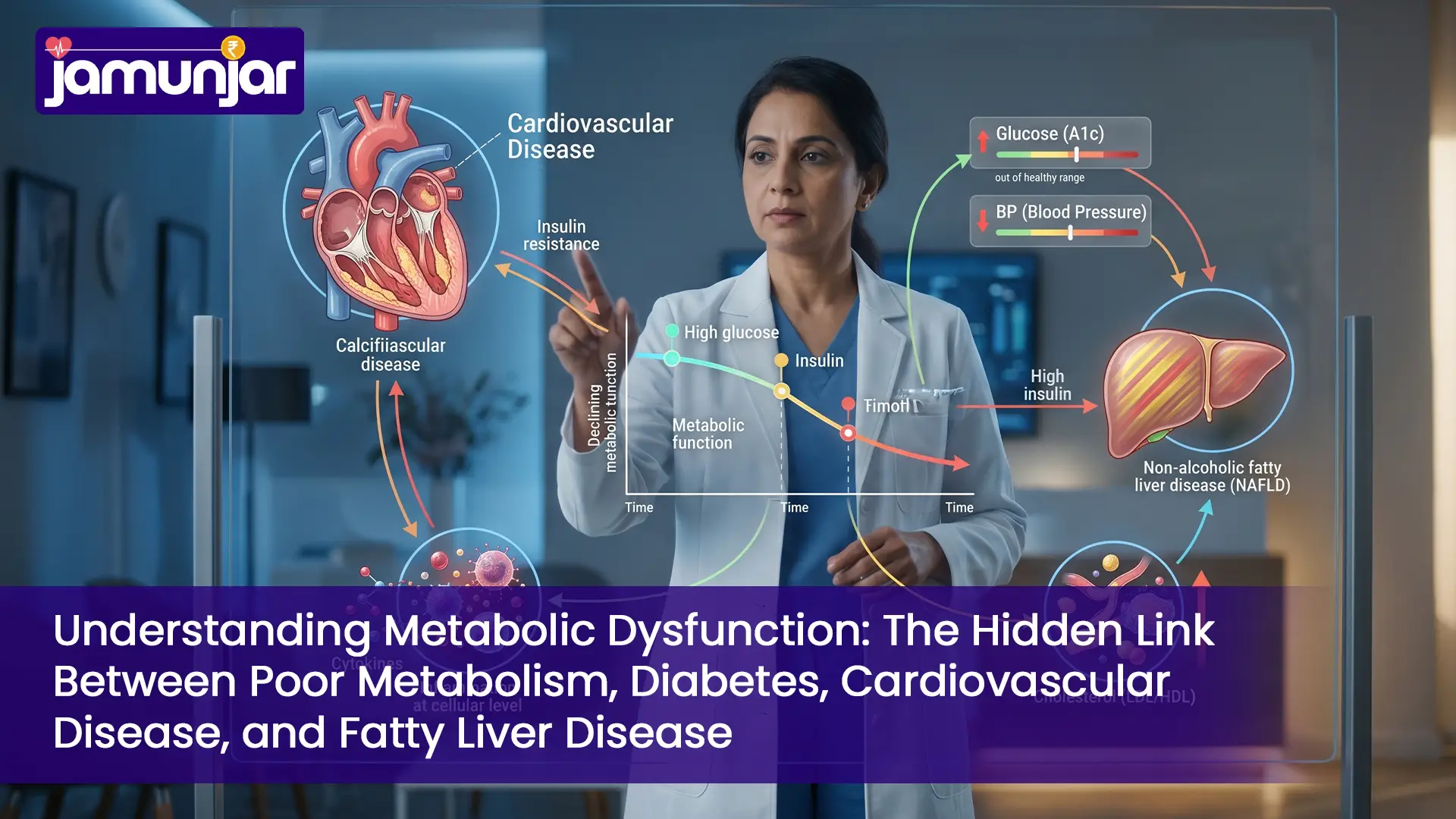
Most people do not realise that type 2 diabetes, cardiovascular disease, and non-alcoholic fatty liver disease share the same root cause: metabolic dysfunction. These three conditions do not develop in isolation — they are driven by the same underlying failure of insulin signalling, lipid metabolism, and chronic inflammation. And they amplify each other over time.
This clinical guide covers the mechanisms linking poor metabolism to each of these diseases, the diagnostic criteria used to identify risk early, and evidence-based prevention and management strategies drawn from the ADA, AHA, NHLBI, and the Diabetes Prevention Program. It is intended as the central overview connecting these conditions — for symptom-level detail, dedicated deep dives are linked throughout, including our guides on early signs of metabolic dysfunction and how fatty liver disease affects weight and metabolism.
Key Takeaways
- Insulin resistance is the central mechanism connecting metabolic dysfunction to type 2 diabetes, cardiovascular disease, and fatty liver disease.
- Longitudinal cohort data suggest the progression from significant insulin resistance to a type 2 diabetes diagnosis spans roughly 10 to 15 years11 — the window for lifestyle intervention is wide if identified early.
- A meta-analysis of over 950,000 patients found metabolic syndrome carries nearly double the risk of myocardial infarction and more than double the risk of stroke, even in the absence of overt diabetes.12
- NAFLD affects an estimated 25–30% of the global population7 and is closely linked to insulin resistance — not just alcohol consumption.
- The Diabetes Prevention Program demonstrated a 58% reduction in diabetes risk through lifestyle modification alone — rising to 71% in participants aged 60 and older.2
- These three diseases operate in a bidirectional, self-amplifying cycle — early intervention in any one of them reduces risk across all three.
| Condition | Core Mechanism | Key Diagnostic Markers | Primary Prevention Strategy |
|---|---|---|---|
| Type 2 Diabetes | Peripheral insulin resistance plus progressive beta-cell exhaustion, until insulin secretion can no longer compensate | Fasting glucose, HbA1c, fasting insulin/HOMA-IR | 7% weight loss, 150 min/week aerobic activity (per the DPP)2 |
| Cardiovascular Disease | Dyslipidaemia, endothelial dysfunction, and vascular inflammation driven by hyperinsulinemia and small, dense LDL particles | Lipid panel (LDL, HDL, triglycerides), blood pressure, hs-CRP | Blood pressure and lipid control, Mediterranean-pattern diet, smoking cessation |
| NAFLD / NASH | Hepatic insulin resistance drives de novo lipogenesis and fat accumulation in liver cells, followed by inflammation and fibrosis | ALT, AST, GGT, liver ultrasound or elastography | 5–10% weight loss, aerobic exercise, reduced added sugar and saturated fat |
All three conditions share insulin resistance as the upstream driver, which is why improving one marker — glucose, lipids, or liver fat — tends to improve the others. For the full detail behind each column, see our dedicated guides on early signs and diagnostic thresholds and fatty liver disease and weight.
1. The Metabolic Crisis Reshaping Global Health
Metabolic health is one of the most pressing challenges confronting modern medicine. Metabolic syndrome — a cluster of cardiometabolic risk factors occurring together — affects an estimated 80 million Americans alone. Yet despite its prevalence, many people do not realise that poor metabolism is the underlying mechanism linking three of the most common chronic diseases: type 2 diabetes mellitus (T2DM), cardiovascular disease (CVD), and non-alcoholic fatty liver disease (NAFLD).
Understanding the pathophysiological relationships between metabolic dysfunction and these chronic comorbidities is essential for both prevention and early intervention. This guide covers the mechanistic links, diagnostic criteria, and evidence-based treatment approaches to support informed decision-making for both clinicians and patients.
2. What Is Metabolic Dysfunction? A Clinical Definition and Mechanistic Overview
2.1 Defining Metabolic Dysfunction at the Cellular Level
Metabolic dysfunction encompasses impaired cellular energy metabolism with decreased insulin sensitivity, aberrant glucose homeostasis, and dysregulated lipid metabolism. At the heart of this impairment is a failure of mitochondrial functioning and insulin signalling cascades.
The central mechanism is insulin resistance — a state in which cells do not respond properly to insulin signals. When this occurs across muscle, liver, and adipose tissue, several pathogenic cascades are initiated: impaired peripheral glucose uptake with compensatory hyperinsulinemia, increased hepatic glucose output, increased lipolysis raising circulating free fatty acids, and elevated pro-inflammatory cytokines including IL-6 and TNF-α. Together, these cascades are what connect a single upstream problem — insulin resistance — to three seemingly unrelated diseases.
The core clinical markers used to detect this process — fasting insulin, HOMA-IR, triglycerides, HDL, blood pressure, and fasting glucose — are covered in detail, with exact diagnostic thresholds, in our guide on early signs of metabolic dysfunction.
3. Metabolic Syndrome: Understanding the Gateway to Disease
Metabolic syndrome is a clustering of metabolic disorders that significantly increases the risk of T2DM and CVD. Per the International Diabetes Federation (IDF) and NHLBI, the diagnosis requires central obesity plus any two of four additional findings: elevated triglycerides, reduced HDL cholesterol, elevated blood pressure, and elevated fasting glucose. The exact cutoffs for each of these five criteria — and a summary table you can check yourself against — are covered in our guide on early signs of metabolic dysfunction. What matters at the pillar level is the concept: any three of these five findings together, even without a formal diabetes diagnosis, meaningfully raises cardiovascular and metabolic risk — which is precisely the mechanism explored in the next two sections.
4. How Poor Metabolism Leads to Type 2 Diabetes
4.1 The Pathophysiology of Insulin Resistance and Beta-Cell Dysfunction
The development from metabolic dysfunction to type 2 diabetes is characterised by two fundamental pathogenic processes. Insulin resistance develops first in skeletal muscle, liver, and adipose tissue, reducing glucose clearance and driving compensatory hyperinsulinemia as the pancreas produces more insulin to keep pace. Beta-cell exhaustion follows over time: pancreatic beta cells initially compensate by increasing insulin output, but persistent hyperglycaemia and oxidative stress gradually cause beta-cell decline. When beta-cell compensation eventually fails, overt hyperglycaemia results in a clinical diagnosis of diabetes.
4.2 Timeline and Progression
The progression from metabolic dysfunction to T2DM is a continuum rather than a sudden event. In the earlier years, insulin resistance develops quietly as fasting glucose and triglycerides begin rising. In the middle years, postprandial hyperglycaemia emerges and HbA1c rises into the 5.7–6.4% prediabetes range. Only in the later years does beta-cell compensation fail, pushing fasting glucose to the ≥126 mg/dL diabetes threshold. Longitudinal cohort data tracking glucose, insulin sensitivity, and insulin secretion in the years before diagnosis support the widely used estimate that this entire journey — from significant insulin resistance to a type 2 diabetes diagnosis — spans approximately 10 to 15 years.11 This is precisely why early identification during the insulin-resistance or prediabetes phase, rather than waiting for a diabetes diagnosis, matters so much for prevention.
5. The Cardiovascular Connection: Metabolic Dysfunction and Heart Disease
The link between poor metabolism and cardiovascular disease is well established in the epidemiological literature. The Framingham Heart Study and the Nurses' Health Study both demonstrated that metabolic dysfunction is an independent predictor of cardiovascular events, even in the absence of overt diabetes or hypertension. Mechanistically, insulin resistance drives a shift toward small, dense LDL particles and reduced HDL, impairs endothelial nitric oxide production, promotes vascular inflammation and monocyte recruitment into the arterial wall, and raises prothrombotic factors such as fibrinogen — together accelerating atherosclerotic plaque formation and clot risk.
A systematic review and meta-analysis pooling 87 studies and more than 950,000 patients found that people with metabolic syndrome carry nearly double the risk of myocardial infarction (relative risk 1.99) and more than double the risk of stroke (relative risk 2.27), compared with people without the syndrome.12 In patients with acute coronary syndrome, the presence of metabolic syndrome is additionally associated with more severe coronary disease and worse long-term outcomes.
6. Non-Alcoholic Fatty Liver Disease (NAFLD): The Silent Metabolic Consequence
NAFLD — increasingly referred to as metabolic-associated fatty liver disease (MAFLD) — encompasses a spectrum of hepatic lipid accumulation ranging from simple steatosis to non-alcoholic steatohepatitis (NASH), with the potential to progress to cirrhosis and hepatocellular carcinoma. NAFLD affects an estimated 25 to 30% of the global population7, rising substantially higher in communities with high rates of obesity and T2DM. In the liver, insulin resistance drives excess fat synthesis and accumulation inside liver cells, and — left unaddressed — this can progress to inflammation and fibrosis.
The detailed pathogenesis, diagnostic tools (including FIB-4, APRI, and transient elastography), and evidence-based reversal strategies for NAFLD are covered in full in our dedicated guide on how fatty liver disease affects weight and metabolic health.
7. The Bidirectional Relationship: How These Diseases Amplify Each Other
7.1 Diabetes Exacerbating Cardiovascular Risk
Cardiovascular risk rises substantially with the onset of type 2 diabetes. Chronic hyperglycaemia directly injures the endothelium via the polyol pathway, advanced glycation end products (AGEs), and protein kinase C (PKC) activation. Diabetes is also an independent risk factor for atrial fibrillation, accounting for approximately 10% of AF occurrences. The combination of metabolic dysfunction, diabetes, and cardiac arrhythmia represents a particularly high-risk clinical phenotype.
7.2 Fatty Liver Disease Accelerating Metabolic Dysfunction and Diabetes Progression
NAFLD aggravates metabolic dysfunction through several bidirectional pathways:
- Worsening hepatic insulin resistance: Accumulated hepatic lipids and inflammation impair insulin receptor phosphorylation and downstream signalling
- Increased hepatic glucose output: Hyperinsulinemia fails to suppress hepatic gluconeogenesis, worsening hyperglycaemia
- Dysbiosis-related metabolic endotoxemia: NAFLD-associated gut dysbiosis increases intestinal permeability, amplifying LPS absorption and TLR4 activation
8. Risk Factors That Accelerate Metabolic Decline
8.1 Modifiable Risk Factors
- Physical Inactivity: Sedentary behaviour reduces skeletal muscle insulin sensitivity; regular activity improves it independently of weight change.
- High-Calorie, Ultra-Processed Diet: Refined carbohydrates and added sugars drive postprandial hyperglycaemia and beta-cell stress; excess saturated fat promotes hepatic steatosis.
- Sleep Dysfunction: Chronic sleep deprivation (under 7 hours nightly) impairs glucose tolerance and promotes visceral adiposity.
- Chronic Psychological Stress: Sustained stress raises cortisol, promoting insulin resistance and visceral fat deposition.
- Tobacco and Excessive Alcohol Use: Both independently worsen insulin resistance, hepatic steatosis, and atherosclerosis risk.
8.2 Non-Modifiable Risk Factors
- Age: Insulin sensitivity naturally declines with age.
- Ethnicity: South Asian, Hispanic, and African American populations show higher prevalence of metabolic syndrome, partly due to genetic predisposition to insulin resistance.
- Family History: Twin studies demonstrate 50 to 70% heritability of insulin resistance and metabolic syndrome susceptibility.
- Maternal Factors: Prenatal programming and maternal obesity increase offspring risk through epigenetic alterations.
9. Evidence-Based Diagnostic Approaches
The ADA and AHA recommend screening for metabolic dysfunction in all adults aged 45 or older (or younger adults with BMI ≥25 plus additional risk factors), anyone with hypertension, dyslipidaemia, or PCOS, and first-degree relatives of people with type 2 diabetes. Core testing covers fasting glucose and HbA1c, a full lipid panel, blood pressure, waist circumference and body composition, and liver function tests. Where risk is higher or results are borderline, clinicians may add an oral glucose tolerance test, fasting insulin or C-peptide, advanced lipid particle testing, or a coronary artery calcium score to detect subclinical disease. Exactly which markers matter most, and the thresholds that define risk, are covered in our guide on early signs of metabolic dysfunction and in understanding your metabolic score.
10. Comprehensive Prevention and Management Strategies
10.1 Lifestyle Modification Interventions
The landmark Diabetes Prevention Program (DPP) demonstrated that intensive lifestyle modification — including modest weight loss of 7% of baseline body weight, 150 minutes of aerobic exercise per week, and dietary change — reduced the risk of diabetes by 58%, rising to 71% in participants aged 60 and older.2 This remains the gold standard intervention for preventing metabolic dysfunction from progressing, and it is the same core recipe — weight, movement, diet, sleep — that improves all three conditions covered in this guide simultaneously. The specific dietary patterns, exercise protocols, and sleep targets that support this are covered in depth in our guides on fatty liver and weight management and early signs of metabolic dysfunction.
10.2 Pharmacological Interventions
While lifestyle modification remains the cornerstone, pharmacological treatments play an important role in high-risk individuals or those unable to reach targets through lifestyle changes alone.
For Glycaemic Control
- GLP-1 Receptor Agonists: Reduce cardiovascular events and support weight loss alongside glycaemic management; recommended as first-line in patients with T2DM and established CVD
- SGLT2 Inhibitors: Reduce cardiovascular events and slow diabetic kidney disease progression, with modest weight loss and blood pressure reduction
- Metformin: First-line agent that improves insulin sensitivity and reduces cardiovascular events
For Cardiovascular Risk Reduction
- Statins: Reduce LDL cholesterol by 30 to 50%; indicated for all patients with metabolic syndrome and diabetes
- Antihypertensive Agents: ACE inhibitors and ARBs offer renal and cardiovascular protection
- Antiplatelet Therapy: Aspirin considered for primary prevention in high-risk individuals
For Hepatic Steatosis and NAFLD
- Pioglitazone: Improves hepatic insulin sensitivity and reduces hepatic lipid content; beneficial in NASH
- GLP-1 Receptor Agonists: Growing evidence for use in NASH, with weight loss and broader metabolic benefits
11. Frequently Asked Questions
Can fatty liver cause diabetes?
Yes — the relationship is reciprocal. NAFLD induces hepatic and systemic insulin resistance through hepatic lipid accumulation, inflammation, and gut-related metabolic endotoxemia, and Mendelian randomisation studies support a causal association between liver fat content and incident type 2 diabetes, independent of obesity. Since both conditions share underlying metabolic dysfunction, causality operates in both directions. Our guide on fatty liver and weight management covers this mechanism in depth.
What is the connection between diabetes and heart disease?
Several mechanisms drive atherosclerosis in type 2 diabetes: chronic hyperglycaemia directly damages the endothelium, hyperinsulinemia and insulin resistance promote small, dense LDL formation and impair HDL function, and inflammatory mediators propagate atherosclerotic plaque development. Diabetes also increases thrombotic risk through platelet dysfunction and elevated fibrinogen, which is why diabetes is associated with more aggressive and earlier-onset coronary artery disease.
Can metabolic dysfunction be reversed before it becomes diabetes?
Yes — and the Diabetes Prevention Program is the strongest evidence for this. Lifestyle modification, including modest weight loss (7% of body weight), 150 minutes of aerobic activity per week, and dietary improvement, reduced diabetes incidence by 58% overall and by 71% in participants aged 60 and older.2 The earlier the intervention in the metabolic decline timeline — ideally during prediabetes or early insulin resistance — the greater the probability of full reversal.
How do I know if I have metabolic dysfunction affecting my liver and heart?
A comprehensive metabolic assessment is required — including fasting glucose, HbA1c, a full lipid panel, liver function tests, blood pressure, waist circumference, and body composition analysis. Advanced tools such as FibroScan for liver stiffness and coronary artery calcium scoring for subclinical atherosclerosis can identify disease before symptoms appear. Understanding your results in the context of a metabolic score is the most actionable approach — our guide on understanding your metabolic score explains what each marker means and what to do about it.
Conclusion
Metabolic dysfunction is not a single disease — it is a cascading failure that, left unaddressed, drives three of the most dangerous chronic conditions in modern medicine simultaneously. The good news is that the window for meaningful intervention is wide, and the evidence is clear: structured lifestyle modification, targeted clinical management, and early detection can break the cycle before it becomes irreversible.
If you recognise risk factors in yourself — whether it is a rising waistline, drifting blood sugar, or abnormal lipid results — a structured metabolic assessment is the most important first step. Jamunjar's Metabolic Reset Program provides comprehensive assessment across all metabolic markers, specialist-led interpretation, and a personalised plan for long-term metabolic health. Book your assessment today.
12. Medical References
- Alberti KGMM, Eckel RH, Grundy SM, et al. Harmonizing the Metabolic Syndrome: A Joint Interim Statement of the IDF Task Force on Epidemiology and Prevention. Circulation. 2009;120(16):1640–1645. Available from: https://pubmed.ncbi.nlm.nih.gov/19805654/
- Knowler WC, Barrett-Connor E, Fowler SE, et al. Reduction in the Incidence of Type 2 Diabetes with Lifestyle Intervention or Metformin. New England Journal of Medicine. 2002;346(6):393–403. Available from: https://pubmed.ncbi.nlm.nih.gov/11832527/
- Isomaa B, Almgren P, Tuomi T, et al. Cardiovascular Morbidity and Mortality Associated with the Metabolic Syndrome. Diabetes Care. 2001;24(4):683–689. Available from: https://pubmed.ncbi.nlm.nih.gov/11315831/
- Kahn SE, Zraika S, Utzschneider KM, Hull RL. The Beta Cell Lesion in Type 2 Diabetes: There Has to Be a Primary Functional Abnormality. Diabetologia. 2009;52(6):1003–1012. Available from: https://pubmed.ncbi.nlm.nih.gov/19437789/
- Perseghin G, Ghosh S, Gerow K, Shulman GI. Metabolic Defects in Lean Nondiabetic Offspring of NIDDM Parents. Diabetes. 1997;46(6):1001–1009. Available from: https://pubmed.ncbi.nlm.nih.gov/9166673/
- Kannel WB, McGee DL. Diabetes and Cardiovascular Disease: The Framingham Study. JAMA. 1979;241(19):2035–2038. Available from: https://pubmed.ncbi.nlm.nih.gov/430798/
- Younossi ZM, Koenig AB, Abdelatif D, et al. Global Epidemiology of Nonalcoholic Fatty Liver Disease. Hepatology. 2016;64(1):73–84. Available from: https://pubmed.ncbi.nlm.nih.gov/26926713/
- Tilg H, Adolph TE, Moschen AR. Multiple Parallel Hits Hypothesis in Nonalcoholic Fatty Liver Disease. Journal of Hepatology. 2021;75(3):568–580. Available from: https://pubmed.ncbi.nlm.nih.gov/34048773/
- American Diabetes Association. Standards of Care in Diabetes. Diabetes Care. 2023;46(Suppl 1):S1–S291. Available from: https://pmc.ncbi.nlm.nih.gov/articles/PMC9810475/
- Grundy SM, Stone NJ, Bailey AL, et al. 2018 AHA/ACC Guideline on the Management of Blood Cholesterol. Journal of the American College of Cardiology. 2019;73(25):e285–e350. Available from: https://pubmed.ncbi.nlm.nih.gov/30423393/
- Tabák AZ, Jokela M, Akbaraly TN, Brunner EJ, Kivimäki M, Witte DR. Trajectories of Glycaemia, Insulin Sensitivity, and Insulin Secretion before Diagnosis of Type 2 Diabetes: An Analysis from the Whitehall II Study. The Lancet. 2009;373(9682):2215–2221. Available from: https://pubmed.ncbi.nlm.nih.gov/19515410/
- Mottillo S, Filion KB, Genest J, et al. The Metabolic Syndrome and Cardiovascular Risk: A Systematic Review and Meta-Analysis. Journal of the American College of Cardiology. 2010;56(14):1113–1132. Available from: https://pubmed.ncbi.nlm.nih.gov/20863953/
Medical Disclaimer
This article is for educational purposes only and does not replace professional medical advice, diagnosis, or treatment. Exercise and dietary changes should be individualised, especially for people with diabetes, cardiovascular disease, joint pain, or limited mobility.
The article is written by

He specializes in comprehensive assessment, pre- and post-rehabilitation, and advanced management of musculoskeletal, neurological, and critical cardio-respiratory conditions.