

What Should You Eat on a GLP-1 Program? A Complete Indian Diet Guide
GLP-1 medications reduce appetite, but your body's nutritional needs don't change. This guide includes a practical one-day and seven-day Indian meal framework — with vegetarian and non-vegetarian options and portion guidance — plus how to adjust it for kidney disease, diabetes, and digestive symptoms.
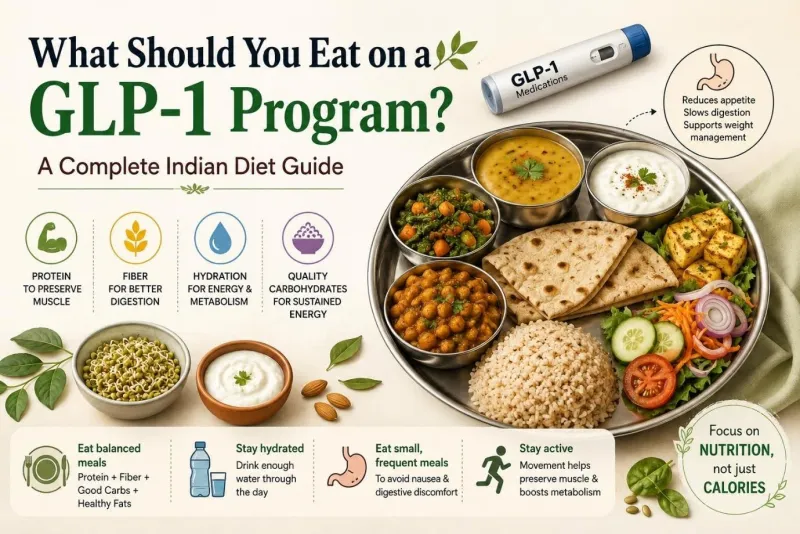
GLP-1 medications have changed obesity treatment in a meaningful way — reducing relentless hunger, calming cravings, and making it possible to eat less without a constant battle of willpower. But here is what many patients do not expect: eating less does not automatically mean eating better.
When appetite drops, so does nutritional intake. That gap — between eating less and eating right — is where many GLP-1 patients begin to run into trouble. For Indian patients especially, structuring your GLP-1 Indian diet around protein, fibre, hydration, and the right carbohydrates is what separates temporary weight loss from lasting metabolic health.
Key Takeaways
- GLP-1 medications suppress appetite but do not reduce your body's need for protein, fibre, or hydration.
- Under-eating on a GLP-1 program leads to muscle loss, fatigue, hair fall, and a slower metabolism — even as weight falls.
- Traditional Indian diets are often low in protein; this gap becomes critical once appetite is suppressed by medication.
- Follow this meal sequence at every meal: eat fibre first, then protein, then carbohydrates.
- Aim for at least 2.5 to 3 litres of fluids daily — thirst cues are also reduced on GLP-1 medication.
- The goal is not eating as little as possible — it is building long-term metabolic strength through nutritional quality.
Why GLP-1 Medication Alone Is Not Enough
The Old Myth: "Eat Less and Move More"
For decades, obesity was framed as a failure of willpower. The prescription was simple: eat less, move more. But metabolism is far more complex than a calorie equation — it is adaptive, hormonal, and deeply influenced by psychology. That understanding eventually drove the development of GLP-1 medications.
How GLP-1 Medications Transformed Obesity Care
GLP-1 medications reduce the constant pull of food-related thoughts, suppress appetite, and help patients lower their food intake naturally. For many, it is the first time in years that hunger feels manageable. But the medication addresses appetite — not nutrition. That responsibility still falls to the patient.
The Hidden Problem: Eating Less, Absorbing Less
How Under-Eating Quietly Develops
As appetite declines, many patients begin eating too little without realising it. Meals become irregular, protein intake drops, and hydration falls. Some get through the day on tea, small bites, and long gaps between meals — simply because hunger is no longer there to prompt them.
Your Body's Nutritional Needs Stay the Same
GLP-1 medications slow gastric emptying and increase fullness, but they do not change what your body needs to function well. Adequate protein, micronutrients, fibre, and water remain essential for cellular repair, metabolic regulation, and energy production — regardless of how little you are eating.
What Happens When You Under-Eat for Too Long
Prolonged under-nutrition during a GLP-1 program leads to a cascade of problems. Visible signs include fatigue, hair fall, constipation, and energy fluctuations. Less visible but more serious: muscle mass loss, a slowing metabolic rate, reduced physical strength, and weakened long-term metabolic resilience. These changes can happen even as your weight continues to drop — which is why the scale alone is a poor measure of progress.
Losing Weight vs. Becoming Healthier: There Is a Difference
Why Thinner Does Not Always Mean Healthier
True health improvement goes well beyond the scale. It includes better energy, emotional well-being, improved confidence, metabolic stability, and quality of life. Arriving at a lower weight depleted, weak, and nutritionally deficient is not the goal. Our guide on hidden signs of poor metabolic health explains what to watch for even when weight is falling.
The Risk of Extreme Calorie Restriction on GLP-1 Medication
Many patients assume that eating as little as possible will make the medication more effective. This leads to dangerously low calorie intake and habitual meal-skipping. Early rapid weight loss reinforces the pattern, but the body responds very differently over time: muscle tissue breaks down, metabolism slows, and sustainable fat loss becomes harder to maintain.
Why Preserving Muscle Mass Matters
Muscle is metabolically active tissue. When calorie intake is excessively low, the body breaks it down for energy — slowing metabolism and reducing physical strength. The goal of a GLP-1 diet program should be metabolic rehabilitation, not nutritional deprivation supported by medication. To understand the wider consequences, read our article on metabolic dysfunction, diabetes, and fatty liver.
Why Indian Patients Need a Specially Tailored Approach
The Nutritional Gaps in a Traditional Indian Diet
Many traditional Indian diets are naturally low in protein and heavily dependent on rice, roti, refined carbohydrates, snacks, sweets, and root vegetables. Protein typically fills only a small corner of the plate. Before GLP-1 therapy, strong appetite may have masked these nutritional imbalances. Once appetite reduces significantly, these gaps become far more consequential.
Every Meal Must Work Harder
When portions are smaller, nutritional density matters more than ever. Each meal needs to deliver meaningful protein, fibre, and micronutrients — not just calories. The question shifts from "how much can I eat?" to "how much nutritional value am I getting from what I do eat?"
Protein: The Foundation of a Successful GLP-1 Indian Diet
Why Protein Cannot Be Compromised
Adequate protein during GLP-1 treatment preserves lean muscle mass, improves satiety, stabilises blood glucose levels, and supports your metabolism. This is not about bodybuilding-style high-protein extremes — it is about clinically appropriate intake tailored to your specific health goals. For detailed guidance, see our resource on protein management on a GLP-1 weight loss program.
The Best Indian Protein Sources for GLP-1 Patients
These foods work well for Indian patients eating smaller portions:
- Eggs — ~6g protein per egg; easy to prepare and highly bioavailable
- Paneer — ~18g protein per 100g; versatile and filling
- Greek yogurt and curd — ~10g protein per 100g; also supports gut health
- Dal and chana — ~9g protein per cooked cup; excellent fibre source too
- Tofu and soy products — ~8g protein per 100g; good plant-based option
- Sprouts — ~4–6g protein per cup; also rich in micronutrients
- Fish and chicken — ~25–30g protein per 100g; highest protein density per serving
- Whey protein — when recommended by your care team; useful when appetite is very low
Prioritising these at every meal improves fullness and ensures your body gets what it needs — even when appetite is low.
Fibre and Hydration: Two Priorities Most Patients Underestimate
Why Fibre Matters More on GLP-1 Medication
Because GLP-1 medications slow digestion, inadequate fibre intake significantly worsens constipation and bloating. Reliable sources include vegetables, fruits with skin, oats, millets, legumes, chia seeds, and flaxseeds. A practical meal sequence: eat fibre first, then protein, then carbohydrates — this improves digestion and blunts blood glucose spikes.
Why Hydration Is Easy to Neglect
On GLP-1 medication, thirst cues also become muted — meaning many patients reduce water intake without realising it. Poor hydration contributes to sluggish metabolism, low energy, and worsened digestive discomfort. Aim for at least 2.5 to 3 litres of fluids daily. Coconut water and buttermilk are excellent choices to replenish electrolytes naturally.
Carbohydrates: Getting the Balance Right Without Cutting Them Out
Why Carbohydrates Are Not the Enemy
Carbohydrates are frequently misunderstood during weight-loss treatment. Eliminating them entirely is not inherently healthier — glucose derived from carbohydrates remains the brain's primary energy source. The real problem is refined carbohydrates combined with low protein intake and poor meal structure, not carbohydrates as a category.
Smarter Carbohydrate Choices for Indian Patients
Choose whole grains, millets, lentils, unpolished rice, quinoa, and oats. These deliver steady energy without the blood glucose spikes associated with refined options — and they also contribute meaningfully to your daily fibre intake.
Foods That Make GLP-1 Side Effects Worse
What to Avoid on a GLP-1 Indian Diet
Many side effects patients attribute to the medication are in fact intensified by poor dietary choices. These foods most commonly worsen nausea, bloating, and digestive discomfort:
- Heavy fried foods — pakoras, samosas, puris, and deep-fried snacks
- Oily gravies and curries — high-fat restaurant dishes and butter-heavy preparations
- Ultra-processed snacks — biscuits, chips, namkeen, and instant noodles
- Refined sugars and sweets — mithai, sugary drinks, and packaged desserts
- Carbonated drinks — significantly worsen bloating on GLP-1 medication
Why Your Food Choices Shape Your Side Effect Experience
Keeping meals light, gentle, and well-structured makes the overall GLP-1 experience considerably more manageable — and long-term medication adherence more sustainable. What you eat on a GLP-1 Indian diet shapes how you feel on this medication, far more than most patients expect. For a fuller picture of which side effects to expect by treatment phase, and how to tell when nausea, constipation, or other symptoms need clinical attention rather than a food swap, see our guide on things to watch out for during a metabolic health management program.
Building a Sustainable Eating Pattern You Can Actually Maintain
Why Consistency Matters More Than Perfection
Everyone responds differently to nutrition during a metabolic health program. A structured but flexible approach — one that fits your preferences, food culture, and daily routine — will always outperform a rigid plan that cannot survive beyond two weeks. Small, consistent improvements compound into meaningful metabolic change over months.
Personalise This Before You Follow It
The meal framework below is a general starting template for an otherwise healthy adult on a GLP-1 program — it is not a personalised prescription, and for several groups it needs to be adjusted by a clinician or dietitian before use:
- Chronic kidney disease: Many patients with kidney disease need protein restricted, not increased. The protein emphasis in this guide and our protein management on a GLP-1 program article does not apply to you without your nephrologist or renal dietitian setting a specific safe target.
- Diabetes: Carbohydrate portions and meal timing in this framework need to be coordinated with your glucose-lowering medication or insulin regimen — followed without that coordination, they can contribute to hypoglycaemia or unexpected glucose swings.
- Active gastrointestinal symptoms: If you have significant nausea, vomiting, or diarrhoea, meal texture, fat content, and timing need to be adjusted specifically to your symptoms and treatment phase, not applied generically from a weekly plan.
For a phase-by-phase breakdown of side effects, deficiency monitoring (B12, vitamin D, iron, electrolytes), and when digestive symptoms need clinical attention, see our guide on things to watch out for during a metabolic health management program. This article focuses on the food itself; that one covers the monitoring.
A Practical One-Day GLP-1 Indian Meal Framework
Portions below use household measures rather than exact grams, since a dietitian should set your specific protein target (see our protein management guide for that). As a general rule: fill roughly a third of the plate with a protein source, a third with vegetables, and keep the grain portion modest — smaller than what you may have eaten before starting the medication.
- Early morning: Warm water, or water with soaked chia or methi seeds
- Breakfast — Veg: Moong dal chilla (2 small) with a paneer or vegetable stuffing | Non-veg: 2-egg vegetable omelette with a small multigrain toast
- Mid-morning: A small bowl (~150 g) of curd or Greek yogurt, or a small handful (6–8) of almonds or walnuts
- Lunch — Veg: 1 katori dal or chana + 1 katori sabzi + 1 small roti or 1/2 katori unpolished rice | Non-veg: A palm-sized portion of grilled fish or chicken + 1 katori sabzi + 1 small roti or 1/2 katori rice. Eat the vegetables and protein first, then the roti or rice last.
- Evening: Buttermilk or coconut water, with roasted chana or sprouts if appetite allows
- Dinner — Veg: Vegetable khichdi with curd, or moong dal soup with sautéed vegetables | Non-veg: A light fish or chicken stew with vegetables and a small portion of rice. Keep dinner lighter than lunch and finish 2–3 hours before bed.
On a day when nausea is prominent — common in the first two to four weeks — swap the heavier lunch or dinner option for khichdi, moong dal soup, or plain curd rice rather than skipping the meal. If constipation is the issue, lean toward the sabzi-heavy and fibre-forward options above and prioritise fluids between meals.
A Seven-Day Meal Rotation
Use this as a starting rotation rather than a fixed rule — swap any day's options for the equivalent veg or non-veg choice above if you prefer more variety, and always adjust texture and portion to how you are tolerating food that day.
| Day | Breakfast | Lunch | Dinner |
|---|---|---|---|
| 1 | Veg: Moong chilla with paneer / Non-veg: Egg bhurji with vegetables | Veg: Dal + lauki sabzi + 1 roti / Non-veg: Grilled fish + sabzi + 1 roti | Veg: Vegetable khichdi + curd / Non-veg: Chicken soup with vegetables |
| 2 | Veg: Besan chilla with vegetables / Non-veg: 2-egg omelette + multigrain toast | Veg: Rajma + salad + small roti / Non-veg: Grilled chicken + sabzi + small roti | Veg: Moong dal soup + sautéed vegetables / Non-veg: Light fish curry + steamed vegetables |
| 3 | Veg: Vegetable oats upma / Non-veg: Light egg curry + 1 roti | Veg: Chana + bhindi sabzi + 1/2 katori rice / Non-veg: Grilled fish + dal + salad | Veg: Light palak paneer + 1 small roti / Non-veg: Chicken stew with vegetables |
| 4 | Veg: Sprouts chaat with curd / Non-veg: Boiled eggs + multigrain vegetable sandwich | Veg: Dal + mixed veg sabzi + millet roti / Non-veg: Grilled chicken + sabzi + millet roti | Veg: Vegetable soup + paneer bhurji / Non-veg: Fish + sautéed greens |
| 5 | Veg: Light paneer paratha + curd / Non-veg: Egg bhurji + 1 multigrain roti | Veg: Chole + salad + 1/2 katori rice / Non-veg: Grilled fish + dal + salad | Veg: Moong dal khichdi + curd / Non-veg: Light chicken curry + vegetables |
| 6 | Veg: Vegetable daliya (broken wheat upma) / Non-veg: 2-egg omelette with vegetables | Veg: Dal + lauki or bhindi sabzi + roti / Non-veg: Grilled chicken + sabzi + roti | Veg: Tofu and vegetable stir-fry (light oil) + small roti / Non-veg: Fish soup with vegetables |
| 7 | Veg: Moong chilla with paneer / Non-veg: Egg-white vegetable scramble | Veg: Rajma or chana + salad + small roti / Non-veg: Grilled fish or chicken + sabzi + small roti | Veg: Vegetable khichdi + curd / Non-veg: Light chicken or fish stew with vegetables |
Mid-morning and evening snacks follow the same pattern each day: curd, Greek yogurt, nuts, roasted chana, sprouts, buttermilk, or coconut water — whichever sits best with your appetite and digestion that day.
The focus throughout is not on eating old quantities. It is on extracting maximum nutritional value — protein and fibre first — from whatever you can comfortably eat.
Why Early Weight Loss Success Can Be Misleading
The Scale Hides What Is Actually Happening
Early success on GLP-1 treatment can make everything seem fine — even while muscle mass declines, hydration worsens, strength reduces, and metabolic resilience quietly erodes beneath the surface. Tracking your actual metabolic state matters far more than watching the number on the scale. Learn how in our guide on understanding your metabolic score.
The Quality of Weight Loss Is Just as Important as the Quantity
Clinicians increasingly recognise that how you lose weight — the composition, the rate, and the nutritional context — matters as much as how much you lose. A thinner body that is metabolically weaker, dehydrated, and nutritionally depleted is not a healthier one.
What Modern Obesity Treatment in India Actually Requires
Medication Is Only One Part of the Solution
Modern obesity care requires intelligent nutritional planning, culturally aligned food choices, sustainable habits, and long-term metabolic stability. Medication alone is insufficient without structured nutritional support and consistent lifestyle modification. If you are noticing early warning signs even while losing weight, our guide on early signs of metabolic dysfunction is worth reading alongside this one.
Why a Clinical Dietitian Is Essential, Not Optional
Clinical dietitians are essential throughout the entire program — not just at the start. Their involvement ensures patients maintain physical, nutritional, and mental well-being well beyond the initial weight loss phase. For Indian patients on a GLP-1 diet program, professional dietary guidance makes the difference between temporary weight loss and lasting metabolic change.
Frequently Asked Questions
What should I eat on a GLP-1 program in India?
Focus on protein-rich Indian foods such as eggs, paneer, dal, chana, and Greek yogurt at every meal. Add fibre through vegetables, millets, and oats. Choose whole grains over refined carbohydrates, stay well hydrated, and avoid heavy fried or ultra-processed foods that worsen GLP-1 side effects.
Can I skip meals while on GLP-1 medication?
No. Even though appetite is reduced, skipping meals leads to insufficient protein and micronutrient intake, which causes muscle loss and fatigue over time. Smaller, nutrient-dense meals eaten consistently are far more effective than irregular meal-skipping.
How much protein do I need on a GLP-1 program?
Your target depends on your body weight, health goals, and activity level — a clinical dietitian should guide your specific intake. The key principle: protein needs remain constant even as total food intake drops, so protein-rich foods should be prioritised at every meal.
Which Indian foods should I avoid on GLP-1 medication?
Avoid heavy fried foods, oily gravies, ultra-processed snacks, sweets, and refined carbohydrates. These worsen the nausea, bloating, and digestive discomfort that are common during GLP-1 treatment.
Is Indian food suitable for a GLP-1 program?
Yes — many traditional Indian foods are excellent for GLP-1 patients when chosen wisely. Dal, chana, paneer, curd, millets, and sabzi are all highly compatible with a GLP-1 Indian diet. The key is reducing reliance on refined carbohydrates, fried snacks, and sugary preparations, while building every meal around protein and fibre first.
What is the best meal timing on a GLP-1 program?
Regular meal timing matters more once you start GLP-1 medication, because hunger signals are suppressed and it becomes easy to forget to eat entirely. Aim for 3 structured meals and 1 snack spaced 3–4 hours apart. Do not rely on hunger to prompt eating — set a fixed meal schedule and follow it regardless of appetite.
Does eating less on GLP-1 medication mean I am on the right track?
Not necessarily. Eating less is not the same as eating well. The nutritional quality of what you eat matters more than the quantity. Many patients who eat very little still develop muscle loss, fatigue, and nutritional deficiencies — even as their weight falls.
Does this meal framework apply if I have kidney disease, diabetes, or digestive issues?
Not without adjustment. This guide`s protein emphasis assumes normal kidney function — people with chronic kidney disease often need protein restricted rather than increased, and should follow a target set by their nephrologist or renal dietitian instead. People with diabetes need the carbohydrate portions and meal timing here coordinated with their glucose-lowering medication or insulin. And anyone with significant nausea, vomiting, or diarrhoea needs meal texture and fat content adjusted to their specific symptoms rather than following the general framework as written. In all three cases, personalised dietitian guidance should take priority over this general template.
Conclusion
GLP-1 medications represent a meaningful advancement in obesity and metabolic care — but appetite suppression alone cannot guarantee long-term health improvement. Sustainable outcomes require balanced nutrition, adequate protein, proper hydration, sufficient fibre, muscle preservation, and consistent lifestyle habits tailored to your individual needs and cultural eating patterns.
The true goal is not rapid weight loss — it is long-term metabolic health, physical strength, sustained energy, and a better quality of life. Every meal during this journey is an opportunity to move closer to that goal. If you are ready to take a structured approach, explore Jamunjar's Metabolic Reset Program.
Medical Disclaimer
This article is for educational purposes only and does not replace professional medical advice. It does not provide diagnosis or treatment. The meal framework in this guide is a general starting point and is not appropriate as written for everyone — it must be individualised by a qualified dietitian or physician for people with chronic kidney disease, diabetes, or active gastrointestinal symptoms, among other conditions. Always consult a qualified dietitian or healthcare professional for individual assessment and personalised care before starting any management program.
The article is written by

Dr Manasi Dake is a well-known Clinical Nutritionist and Dietician associated with Zen Multi Speciality Hospital. She has 10 years of experience in Clinical Nutrition and Dietetics and worked as an expert in different cities in India.