

Physiotherapy Exercises for Back Pain: Safe Moves You Can Start at Home
Learn which physiotherapy exercises for back pain are safe to do at home, which movements to avoid, and when to see a physiotherapist for lasting relief.
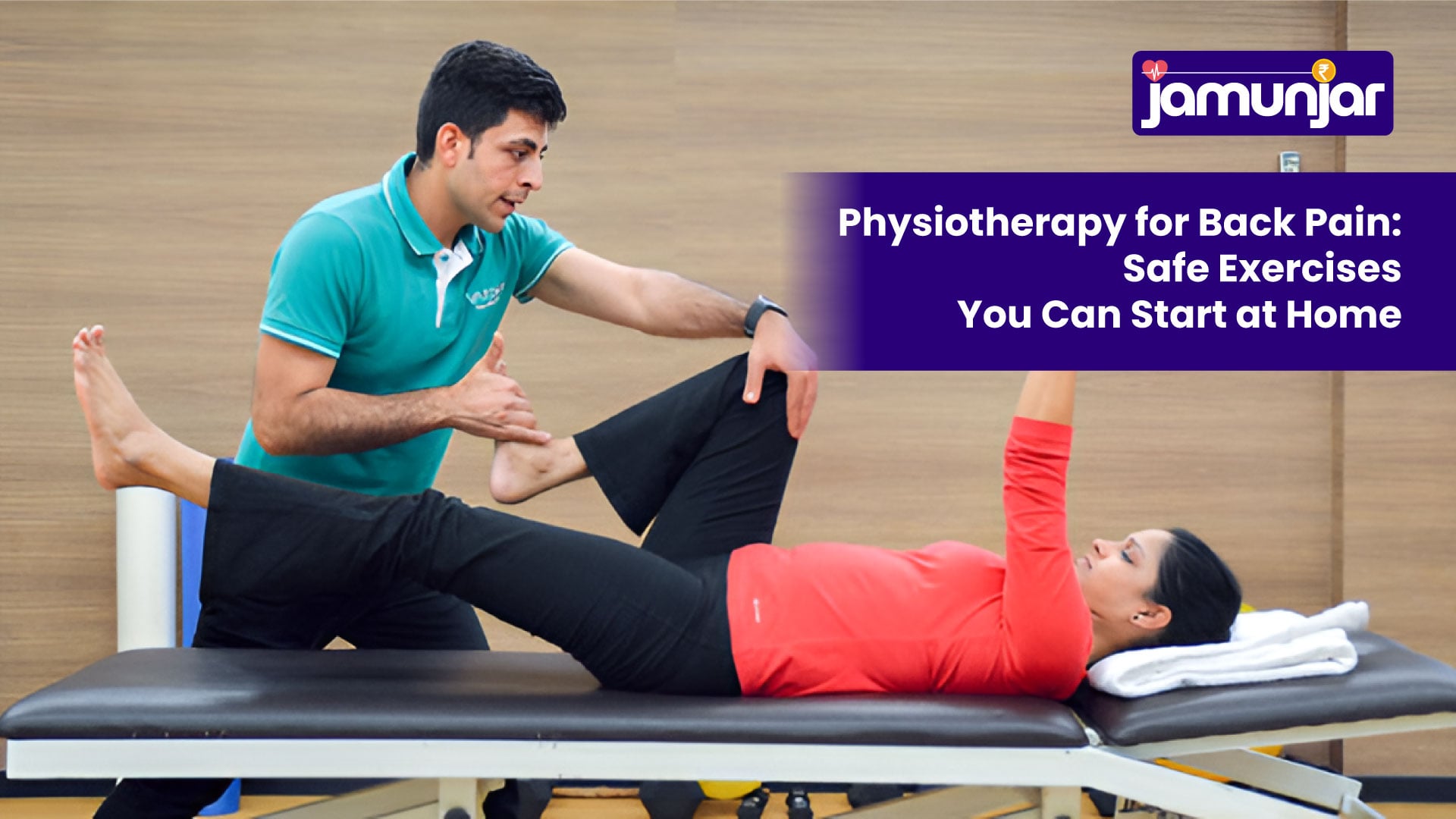
Medical Disclaimer: This is general information only, not medical advice. Consult a doctor or physiotherapist before starting exercises.
Commercial Disclosure: Jamunjar offers home physiotherapy services in Mumbai, Delhi, and Hyderabad. Services mentioned below are shared for convenience.
Back pain does not discriminate. Whether you are hunched over a laptop in a Mumbai flat, driving long hours in Delhi traffic, or recovering from a disc issue in Hyderabad, the pain can make even simple tasks feel exhausting. For millions of Indians, back pain has become a daily companion — yet most people either push through it or reach for a painkiller and hope for the best. Neither approach fixes the underlying problem.
Physiotherapy exercises for back pain target the root cause: weak core muscles, stiff joints, poor posture, and faulty movement patterns. Done correctly, they can reduce pain, prevent flare-ups, and restore the freedom of movement you may have lost. This guide walks you through a safe home routine, explains what to avoid, and tells you exactly when you need professional help — so you can get better faster.
Key Takeaways
- Physiotherapy exercises for back pain work by strengthening the core and glutes, improving spinal mobility, and correcting posture — not just masking symptoms.
- A beginner home routine should follow a three-step sequence: mobility warm-ups first, then core activation, then stretching — in that order.
- Start with 10–15 repetitions of pelvic tilts and bridges daily; most people notice reduced stiffness within 2–3 weeks of consistent practice.
- Stop exercising immediately if you experience numbness, tingling down the legs, or sudden worsening of pain — these are red-flag symptoms requiring medical review.
- Home exercise is not safe if you have a significant disc herniation, recent surgery, or progressive neurological symptoms — see a physiotherapist first.
- A personalised physiotherapy assessment typically covers posture, muscle strength, movement patterns, and a tailored rehab plan — it is the fastest route to lasting relief.
Why physiotherapy is recommended for back pain
Physiotherapy is a systematic approach to managing back pain. Rather than simply treating the symptom, a physiotherapist identifies the underlying contributors — stiffness, muscle weakness, poor posture, and faulty movement patterns — and prescribes a targeted programme to address them. The result is a stronger, more resilient spine that is less likely to give you trouble again. To understand the full scope of what physiotherapy can do, read What Is Physiotherapy and How Does It Help?
How physiotherapy compares to rest and painkillers
Short-term rest can help during an acute flare-up, but prolonged inactivity weakens the muscles that support your spine — often making pain linger or return. Painkillers provide temporary relief but do nothing to correct the imbalances or movement habits that drive recurring pain. Physiotherapy exercises for back pain aim for long-term improvement: they build the strength and flexibility your spine needs to stay stable. For a direct comparison of these approaches, see Physiotherapy vs Painkillers: Safer Long-Term Relief for Joint and Muscle Pain.
When back pain needs urgent medical review
Some back pain needs immediate medical attention rather than self-guided exercises. Seek urgent care if you notice any of the following:
- Severe or sudden pain following an injury or fall
- Numbness, tingling, or weakness spreading down the legs
- Loss of bladder or bowel control
- Back pain accompanied by fever or unexplained weight loss
Once serious causes are ruled out, a physiotherapist can design a safe and structured rehab plan. Not sure whether your symptoms warrant a visit? Check 10 Signs Your Body Needs Physiotherapy for a clear checklist.
Physiotherapy exercises for back pain you can try at home
Many physiotherapy exercises for back pain can be done safely at home with no equipment. Follow the sequence below — mobility first, then core activation, then stretching — to get the best results without risking injury.
Step 1 — Gentle mobility warm-ups (pelvic tilts and knee-to-chest)
Always start with gentle movement to prepare your muscles and joints before loading them:
- Pelvic tilts: Lie on your back with knees bent and feet flat on the floor. Gently press your lower back toward the floor, hold for 3–5 seconds, then release. Repeat 10–15 times. This activates the deep stabilising muscles of the spine.
- Knee-to-chest stretch: Lie on your back and draw one knee slowly toward your chest, keeping the other leg bent. Hold for 15–20 seconds, then switch sides. This gently decompresses the lower spine and relieves stiffness.
These two movements alone can make a noticeable difference in morning stiffness when done daily.
Step 2 — Core and glute activation for spine support
A stable spine depends on strong core and glute muscles. When these muscles are weak, the lower back absorbs forces it was never designed to handle. These exercises correct that imbalance:
- Bridges: Lie on your back with knees bent and feet hip-width apart. Press through your heels, lift your hips toward the ceiling, and squeeze your glutes at the top. Hold for ~5 seconds, then lower slowly. Repeat 10–12 times.
- Bird-dog: Start on all fours with wrists below shoulders and knees below hips. Extend your right arm and left leg simultaneously, keeping your back flat. Hold for ~5 seconds, then return and switch sides. Repeat 8–10 reps each side. This trains spinal stability without compressing the discs.
Step 3 — Stretching to ease stiffness and improve flexibility
Finish each session with stretching to release tight muscles and improve range of motion:
- Cat-cow: On all fours, inhale and gently arch your back (cow), then exhale and round it toward the ceiling (cat). Move slowly and in control. Do 8–10 slow repetitions. This mobilises every segment of the spine.
- Child's pose: Sit back onto your heels, stretch both arms forward on the floor, and breathe deeply. Hold for 20–30 seconds. This stretches the lower back extensors and is one of the most effective positions for immediate relief.
Consistency matters more than intensity. Most people who combine mobility warm-ups, core activation, and stretching — practised daily for 3–4 weeks — report a meaningful reduction in stiffness and pain, especially when working alongside a physiotherapist. If you would like more detail on how these exercises fit into broader lower back care, read The Complete Guide to Lower Back Pain.

If travel or time is a barrier, guided sessions through home physiotherapy visits or remote supervision can make it much easier to stay consistent. You can explore home services via physiotherapy at home in Mumbai, physiotherapy at home in Delhi, and physiotherapy at home in Hyderabad. You can also book through the Jamunjar Android app or the Jamunjar iOS app.
Common mistakes and movements to avoid with back pain
Even well-intentioned home routines can worsen pain when done incorrectly. Knowing what to avoid is just as important as knowing what to do.
High-impact activities and heavy lifting
Avoid high-impact activities — such as jumping, running on hard surfaces, or burpees — while your pain is active. Heavy lifting without supervision places enormous compressive load on an already irritated spine. If any movement causes sharp, shooting, or worsening pain, stop immediately and reassess before continuing.
Exercises that commonly aggravate back pain
- Full sit-ups and crunches — these flex the lumbar spine under load and can worsen disc problems
- Straight-leg deadlifts without coaching — high spinal load if technique is poor
- Toe touches from standing — places sudden stretch on already inflamed nerves or discs
- Double leg raises — creates excessive hip flexor pull on the lower back
Understanding exactly why your lower back hurts helps you choose the right movements. For a detailed breakdown, see Why Does My Lower Back Hurt? Causes and Physiotherapy.
When home exercises may not be safe
Home exercise may be unsafe if you have:
- Significant disc herniation or spinal stenosis confirmed on imaging
- Recent spinal surgery or a vertebral fracture
- Progressive neurological symptoms (worsening weakness, spreading numbness)
In these situations, please consult a physiotherapist before attempting any exercise on your own. Home visits make this step easy — book through the Jamunjar app or explore services in home physiotherapy in Delhi or home physiotherapy in Hyderabad.
When to stop home exercise and see a physiotherapist
Self-led care is a great starting point, but there are clear signals that tell you it is time to get a professional assessment. Catching these signals early prevents a manageable problem from becoming a chronic one.
Red-flag symptoms you must not ignore
Stop exercising and seek medical review if you notice:
- Sudden worsening of pain during or after exercise
- Numbness or tingling spreading down one or both legs
- Muscle weakness or a feeling of instability in the legs
- Pain that is disrupting your sleep or preventing basic daily activities
What a physiotherapy assessment for back pain involves
A structured physiotherapy assessment typically includes:
- Posture, movement, and muscle strength evaluation
- Identifying the likely contributors to your specific pain pattern
- Designing a personalised exercise and rehabilitation plan
- Education on posture, workplace ergonomics, and long-term prevention
A tailored plan ensures your routine is safe, effective, and appropriate for your exact condition — rather than a generic programme that may not address your particular issue. If your pain is related to desk work, MSK Physiotherapy for Desk Job-Related Back Pain offers targeted guidance. For a broader understanding of causes and treatment options, see Lower Back Pain: Causes, Symptoms, Treatment and Physiotherapy.
Frequently Asked Questions
How long does it take to recover from back pain with physiotherapy?
Recovery time depends on the severity of the condition and how consistently you follow your programme. Mild lower back pain with no structural damage often improves in 2–4 weeks with daily physiotherapy exercises. More significant issues — such as disc herniation or post-operative rehab — can take 6–12 weeks or longer with guided physiotherapy. The key variable is consistency: patients who exercise daily recover faster than those who exercise sporadically.
Can I do physiotherapy exercises for back pain every day?
Yes, gentle mobility exercises like pelvic tilts, knee-to-chest stretches, and cat-cow can be done daily without risk of overtraining. Strengthening exercises like bridges and bird-dogs are best done once daily or on alternate days to allow the muscles to recover and adapt. If any exercise causes sharp pain during or after the session, reduce the intensity or consult your physiotherapist.
Which physiotherapy exercises are best for lower back pain specifically?
For lower back pain, the most evidence-backed physiotherapy exercises are pelvic tilts, bridges, bird-dog, cat-cow, and the knee-to-chest stretch. These movements target the core and glute muscles that directly support the lumbar spine, while also improving flexibility without placing harmful loads on the discs. Your physiotherapist may add McKenzie exercises or lumbar stabilisation drills depending on your specific diagnosis.
What movements should I completely avoid when my back is hurting?
When back pain is active, avoid full sit-ups, straight-leg deadlifts, standing toe touches, double leg raises, and any high-impact activity. These movements either flex the lumbar spine under load or place sudden stress on irritated discs and nerves. Also avoid prolonged sitting or standing in one position — micro-movement breaks every 30–40 minutes help prevent stiffness from building up.
Can physiotherapy prevent future back pain flare-ups?
Often, yes. Regular physiotherapy-style strengthening and mobility work improves spinal support and corrects the movement habits that cause recurrent pain. Many people benefit significantly from maintaining a simple 10–15 minute daily routine even after their acute pain resolves. Think of it as ongoing maintenance for your spine — the same way you would maintain any other part of your health.
Is physiotherapy for back pain available at home in India?
Yes. Home physiotherapy services are widely available across major Indian cities including Mumbai, Delhi, and Hyderabad through providers like Jamunjar. A registered physiotherapist visits your home, assesses your condition, and designs a programme you can follow safely. This is especially useful for elderly patients, those recovering from surgery, or anyone who finds clinic travel difficult. You can also book via the Jamunjar app on Android and iOS.
How is physiotherapy different from seeing an orthopaedic doctor for back pain?
An orthopaedic doctor primarily diagnoses structural problems (disc herniation, fractures, stenosis) and may prescribe medication, injections, or surgery when necessary. A physiotherapist focuses on rehabilitation — restoring movement, building strength, and improving function through exercise and manual therapy. The two roles are complementary: your doctor rules out serious pathology, and your physiotherapist then guides your recovery. For sciatica specifically, Physiotherapy for Sciatica: Fast Nerve Pain Relief Without Surgery explains how physiotherapy can help avoid surgical intervention.
Conclusion
Physiotherapy exercises for back pain are one of the safest and most effective ways to manage both acute and chronic back problems. By following the three-step sequence — mobility warm-ups, core and glute activation, then stretching — you can reduce stiffness, build spinal support, and lower the chance of future flare-ups. Start with the exercises in this guide, practise daily, and be patient: real improvement takes weeks, not days.
If your pain persists beyond a few weeks, worsens, or limits your daily life, a personalised physiotherapy assessment is the most efficient next step. You can explore home physiotherapy services in Mumbai, Delhi, or Hyderabad through Jamunjar. And if you want to address your health more holistically — including the metabolic and lifestyle factors that often contribute to musculoskeletal pain — explore the Metabolic Reset Program.
Medical Disclaimer: This is general information only, not medical advice. Consult a doctor or physiotherapist before starting exercises.
References
The article is written by

He specializes in comprehensive assessment, pre- and post-rehabilitation, and advanced management of musculoskeletal, neurological, and critical cardio-respiratory conditions.