

Thyroid Problems and Weight Gain: The Real Link, What to Expect, and How to Respond
Thyroid disorders can change appetite, energy use, fluid balance, and body composition. This article explains why underactive thyroid disease is linked with modest weight gain, why overactive thyroid causes weight loss, and why treatment restores normal physiology rather than acting as a weight-loss shortcut.
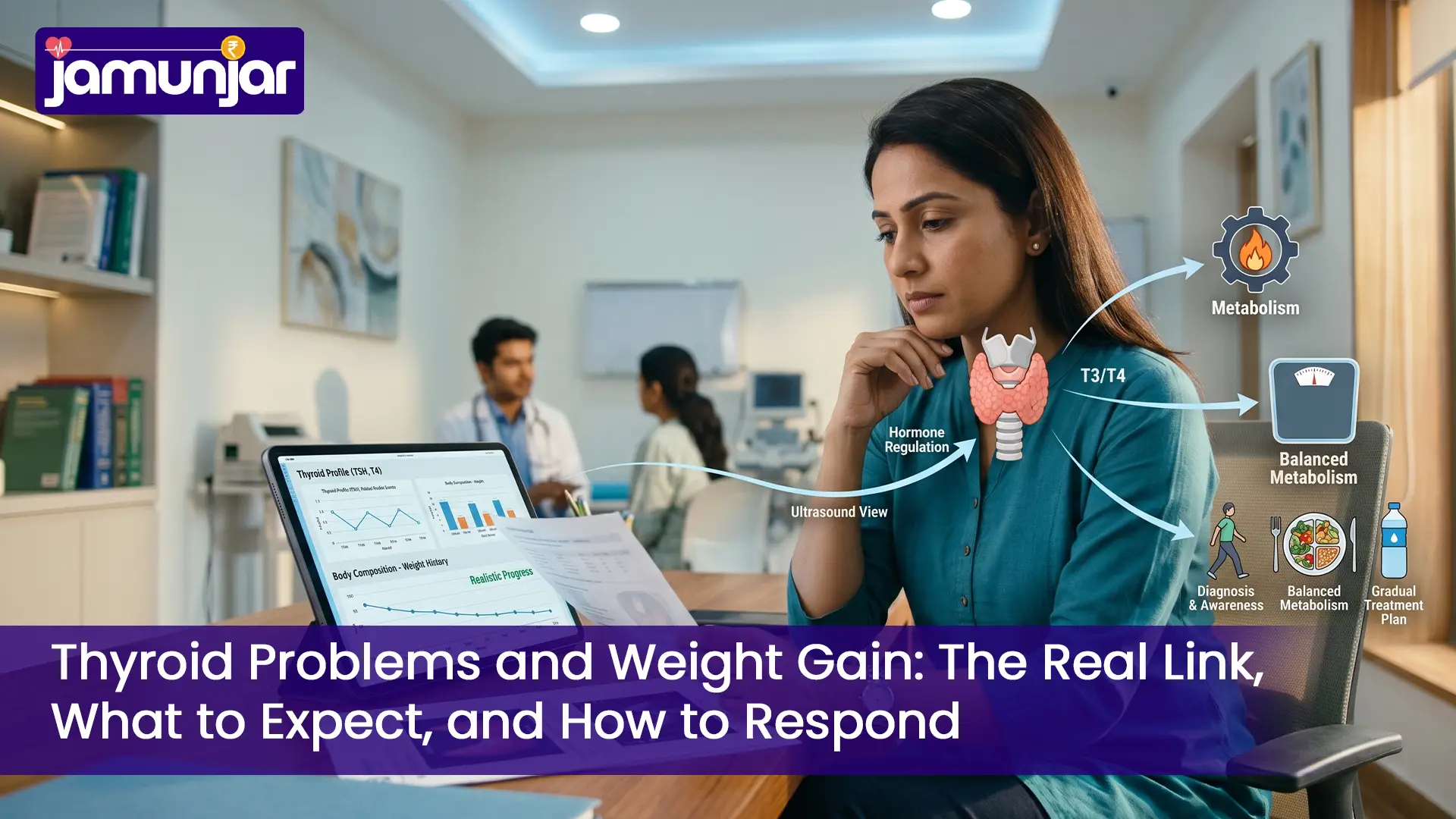
Weight change is one of the most searched thyroid topics — and one of the most misunderstood. The evidence is clear on one major point: thyroid disease can affect the scale, but the size and direction of that change depends on whether the gland is underactive or overactive, how severe the imbalance is, and how long it has been present. The American Thyroid Association states directly that most of the weight gained in hypothyroidism is due to retained salt and water rather than fat, and that for most patients only around 2 to 4.5 kg (5–10 lb) of weight gain is related to the thyroid itself, depending on severity.1
That matters because many people attribute every kilogram to their thyroid and miss other causes — sleep loss, calorie surplus, medications, menopause, metabolic dysfunction, or reduced activity. This article takes a practical, evidence-based view: what thyroid hormones do, why weight moves up or down, what testing is actually useful, and how to manage weight without turning medication into a false promise. One point we return to throughout: correcting a thyroid disorder treats the thyroid disorder — it is not a weight-loss shortcut.
| Hypothyroidism (underactive) | Hyperthyroidism (overactive) | |
|---|---|---|
| Expected weight direction | Modest gain — typically 2–4.5 kg (5–10 lb), mostly fluid retention rather than fat1 | Weight loss, proportional to how overactive the thyroid is; appetite may rise but usually not enough to fully offset it1 |
| Common symptoms | Fatigue, cold intolerance, constipation, dry skin, puffiness, low mood | Palpitations, tremor, heat intolerance, sweating, anxiety, frequent bowel movements |
| Key tests | TSH (elevated), free T4 (low); thyroid antibodies if autoimmune disease is suspected | TSH (suppressed), free T4/T3 (elevated); TSH-receptor antibodies if Graves' disease is suspected |
| Treatment | Levothyroxine to normalise TSH — restores fluid balance and energy, but is not a weight-loss treatment | Antithyroid medication, radioactive iodine, or surgery depending on cause and severity |
Weight change alone never confirms either diagnosis — thyroid function is confirmed by blood tests, not the scale.
Key Takeaways
- Thyroid hormones set the body's baseline energy expenditure — which is why thyroid dysfunction moves the scale, and why correcting hormone levels is the essential first step.
- Hypothyroidism-related weight gain is usually modest (a few kilograms) and often reflects fluid retention rather than significant fat accumulation.
- Treating hypothyroidism alone rarely results in significant weight loss — lifestyle strategies (nutrition, sleep, exercise) are needed alongside medication.
- Thyroid hormone should never be used as a slimming agent in people with normal thyroid function — overtreatment risks include cardiac arrhythmia, bone loss, and muscle wasting.
- Unexpected weight loss with palpitations, tremor, or anxiety should prompt thyroid testing — not caloric restriction.
- If thyroid tests are normal, weight change should be investigated for other causes: poor sleep, chronic stress, metabolic dysfunction, medication effects, and calorie balance.
How Thyroid Hormones Control Metabolism and Body Weight
Thyroid Hormones and Resting Energy Expenditure
The connection between thyroid function and weight begins with a straightforward mechanism: thyroid hormones help set the body's baseline energy expenditure, so when hormone levels shift, the body may burn fewer or more calories at rest. Thyroid hormone also influences heart rate, gut motility, temperature regulation, and protein synthesis — all of which are interconnected with how the body manages energy over time.
Why Low Thyroid Hormone Leads to Weight Change
When thyroid hormone is low, metabolism slows. Patients often experience fatigue, constipation, cold intolerance, dry skin, and a puffy appearance alongside gradual weight gain. If persistent fatigue is your main concern, our guide on why you are always tired covers the wider set of causes beyond thyroid function. The weight gain itself is real but usually limited — in mild or subclinical hypothyroidism especially, the effect on the scale is modest. Importantly, thyroid-related weight gain is not always pure fat accumulation. In many patients, a significant component is fluid retention, which is why the number on the scale can improve after treatment even when body fat has not changed substantially. Losing weight with hypothyroidism is possible, but it is usually easier once thyroid levels are normalised and lifestyle factors are addressed alongside medical treatment.
Why Hypothyroidism Is Linked With Modest Weight Gain
The Clinical Reality of Weight Gain in Hypothyroidism
When the thyroid underproduces hormone, metabolism slows and the body retains more salt and water. Authoritative sources consistently describe hypothyroidism-related weight gain as real but limited — often a few kilograms rather than a dramatic transformation. Clinical evidence supports this pattern. In adults with primary hypothyroidism, levothyroxine treatment improves thyroid function and symptoms, but the scale does not always fall dramatically. Research has shown no significant average weight change after treatment in many patients, with only a small subset — typically those with more severe disease — losing a modest amount of weight.
What to Expect From Treatment
This is an important point for clinical counselling. Thyroid treatment is not a weight-loss shortcut — a patient who expects medication alone to remove 10 to 30 kilograms will almost certainly be disappointed. The more realistic goal is to restore normal thyroid function, reduce fluid retention, improve energy levels, and then apply sound nutrition and activity strategies to address fat mass. The thyroid may be part of the story — it is rarely the whole story. If your weight has stopped responding despite consistent diet and exercise, and thyroid tests come back normal, our guide on why you might not be losing weight despite diet and exercise covers the wider set of reasons a plateau happens.
Why Hyperthyroidism Often Causes Weight Loss
Excess Thyroid Hormone and Its Metabolic Effects
Overactive thyroid disease has the opposite metabolic effect. Excess thyroid hormone raises resting energy expenditure, increases heat production, and can cause weight loss even when appetite is normal or elevated. The American Thyroid Association notes that patients may lose weight before treatment, and that weight typically returns once hormone levels normalise.1 That return of weight is not a treatment failure — it reflects the reversal of an abnormal catabolic state.
When Unexplained Weight Loss Should Trigger Testing
In some patients, the weight regained after therapy includes lean mass and body water that had been lost during the hyperthyroid period — which is why body composition matters as much as body weight in this context. The key clinical message is clear: unexpected weight loss accompanied by palpitations, tremor, anxiety, sweating, sleep disturbance, or frequent bowel movements should trigger thyroid testing rather than a caloric restriction plan.
Thyroid Belly, Neck Fullness, and What Those Terms Usually Mean
What "Thyroid Belly" Actually Means
The phrase "thyroid belly" is widely used online to describe abdominal bloating, water retention, constipation-related distension, or central weight gain associated with hypothyroidism. The term is understandable but it is not a clinical diagnosis. It should prompt a broader review of thyroid status, diet, medications, and digestive symptoms — not a conclusion based on appearance alone.
Neck Fullness and When to Investigate
Similarly, "thyroid neck fat" is not a medical diagnosis. Neck fullness may be related to generalised body fat, a goiter, a thyroid nodule, or diffuse swelling. A clinician can usually distinguish between these causes with a physical examination and appropriate investigations, particularly if there is associated difficulty swallowing, hoarseness, or a sensation of pressure in the neck.
How Doctors Diagnose Thyroid-Related Weight Change
Standard Thyroid Tests
A thyroid workup typically begins with TSH and free T4 measurement, and may include free T3, thyroid antibodies, or ultrasound if there is a goiter or a suspicious nodule. The right tests depend on the clinical picture. Weight change alone is not sufficient to diagnose either hypothyroidism or hyperthyroidism. Symptom patterns help guide the workup: fatigue, swelling, cold intolerance, constipation, or menstrual irregularities suggest hypothyroidism; palpitations, tremor, heat intolerance, sweating, or anxiety suggest hyperthyroidism.
Ruling Out Other Causes
It is equally important to rule out other contributors to weight change: diabetes, depression, corticosteroid use, fluid overload, menopause, sleep apnea, and liver or kidney disease all belong in the differential. Underlying metabolic dysfunction — independent of thyroid status — is also a significant contributor to unexplained weight gain that is often missed. Thyroid testing should be part of a broad clinical assessment, not a one-step explanation for the entire problem.
Evidence-Based Ways to Manage Weight Safely
Step 1: Treat the Thyroid First
The first priority is always to treat the thyroid disorder correctly. For hypothyroidism, this usually means levothyroxine adjusted to normalise TSH. For hyperthyroidism, treatment may involve antithyroid medication, radioactive iodine, or surgery depending on the cause and severity. Without normalising hormone levels first, weight management efforts are working against the body's own physiology.
Step 2: Lifestyle Strategies Once Hormone Levels Are Stable
The second step is to apply sound weight-management principles once hormone levels are stable: protein-rich meals, adequate fibre, consistent sleep, resistance training, and sufficient weekly movement to preserve muscle mass. This is particularly important because thyroid dysfunction affects lean mass and energy expenditure — not just fat mass. The third step is to avoid unsafe shortcuts. Thyroid hormone should never be used as a slimming agent in people with normal thyroid function — overtreatment carries real risks including cardiac arrhythmia, bone loss, anxiety, and muscle wasting. The American Thyroid Association explicitly warns against this.1 The practical rule is straightforward: treat the thyroid first, then address lifestyle — not the other way around.
When Weight Change Is Not Caused by the Thyroid
Other Causes of Unexplained Weight Gain
If thyroid tests are normal, the investigation should move elsewhere. Calorie intake, physical inactivity, alcohol, psychological stress, poor sleep, medication side effects, and hormonal transitions can all shift weight more significantly than mild thyroid abnormalities. Underlying metabolic dysfunction — including insulin resistance and metabolic syndrome — is one of the most important and often-missed drivers of unexplained weight gain in people whose thyroid results appear normal. This is why a thorough medical history and a broad clinical approach matter so much in weight management.
Unexplained Weight Loss: When to Investigate Further
The same principle applies in reverse. Rapid unintentional weight loss should not automatically be attributed to the thyroid. Diabetes, infection, gastrointestinal disease, malignancy, and anxiety disorders all belong in the differential diagnosis — particularly when weight loss is unexplained and accelerating. A structured metabolic assessment is the most efficient way to evaluate multiple contributing factors simultaneously.
Frequently Asked Questions
Does thyroid affect weight?
Yes. Thyroid hormones directly influence metabolic rate, so an underactive thyroid can contribute to modest weight gain and an overactive thyroid can cause weight loss. The effect is real, but it is often smaller than people expect — particularly in mild or subclinical thyroid dysfunction. Most hypothyroidism-related weight gain is a few kilograms, not 10 to 30 kilograms.
Can walking or exercise control thyroid problems?
Physical activity cannot correct a thyroid hormone imbalance by itself, but regular exercise supports weight management, cardiovascular health, mood, and energy levels — all of which can be affected by thyroid disease. Exercise complements medical treatment rather than replacing it. It is especially important for preserving lean muscle mass, which thyroid dysfunction can deplete.
How do you reduce high thyroid levels?
If thyroid hormone is too high due to hyperthyroidism, doctors may prescribe antithyroid medication, radioactive iodine therapy, or surgery depending on the cause and severity. Self-managing thyroid levels without medical supervision is not safe or effective. Always work with a clinician to determine the cause before pursuing any treatment.
How do you balance thyroid levels naturally?
The safest path is a proper medical evaluation, the right laboratory tests, and treatment tailored to the specific disorder. Diet, exercise, and stress management support overall metabolic function, but they do not replace accurate diagnosis and appropriate clinical follow-up. Iodine adequacy matters for thyroid hormone synthesis, but iodine supplements should only be taken under medical guidance.
Why am I gaining weight even though my thyroid is normal?
Normal thyroid function does not rule out other causes of weight gain. Insulin resistance, poor sleep, chronic stress, medication side effects, calorie surplus, reduced activity, menopause, and other hormonal changes can all drive weight gain independently of thyroid status. A broader metabolic assessment — covering blood sugar, lipids, body composition, and lifestyle factors — is the most productive next step when thyroid tests are normal but weight remains a concern.
Can hypothyroidism cause metabolic syndrome?
Hypothyroidism can worsen several components of metabolic syndrome — including raising LDL cholesterol, triglycerides, and blood pressure while reducing insulin sensitivity. In people with existing metabolic dysfunction, untreated or undertreated hypothyroidism can accelerate the progression of cardiometabolic risk. This is one reason why thyroid evaluation is recommended as part of a comprehensive metabolic workup.
Is it safe to take thyroid hormone for weight loss?
No. The American Thyroid Association explicitly warns against using thyroid hormone as a slimming agent in people with normal thyroid function.1 Overtreatment carries serious risks including cardiac arrhythmia, bone mineral loss, muscle wasting, and anxiety. Thyroid hormone replacement is indicated only when there is confirmed, clinically significant hypothyroidism — not as a weight management shortcut.
Conclusion
Thyroid dysfunction can genuinely affect weight — but the effect is usually modest, and treatment alone rarely resolves weight concerns completely. The most effective approach combines accurate thyroid diagnosis and treatment with a structured plan addressing nutrition, sleep, activity, and the broader metabolic picture. If your weight is not responding to thyroid treatment, or if your thyroid tests are normal but your weight, energy, or body composition are still a concern, the answer usually lies in a broader metabolic evaluation.
Jamunjar's Metabolic Reset Program assesses thyroid health alongside all key metabolic markers — blood sugar, lipids, body composition, sleep, and hormonal balance — to give you a complete clinical picture and a personalised plan. Book your metabolic assessment today.
References
- American Thyroid Association. Thyroid and Weight [Internet]. [Accessed 11 May 2026]. Available from: https://www.thyroid.org/thyroid-and-weight/
- Ríos-Prego M, Anibarro L, Sánchez-Sobrino P. Relationship between thyroid dysfunction and body weight: a not so evident paradigm. International Journal of General Medicine [Internet]. 2019;12:299–304. Available from: https://pmc.ncbi.nlm.nih.gov/articles/PMC6711558/
- Sanyal D, Raychaudhuri M. Hypothyroidism and obesity: An intriguing link. Indian Journal of Endocrinology and Metabolism [Internet]. 2016;20(4):554–557. Available from: https://pmc.ncbi.nlm.nih.gov/articles/PMC4911848/
- Lee SY, Braverman LE, Pearce EN. Changes in body weight after treatment of primary hypothyroidism with levothyroxine. Endocrine Practice [Internet]. 2014;20(11):1122–1128. Available from: https://pubmed.ncbi.nlm.nih.gov/24936556/
- Lomenick JP, El-Sayyid M, Smith WJ. Effect of levothyroxine treatment on weight and body mass index in children with acquired hypothyroidism. The Journal of Pediatrics [Internet]. 2008;152(1):96–100. Available from: https://pubmed.ncbi.nlm.nih.gov/18154906/
- Liu G, et al. Thyroid hormones and changes in body weight and metabolic parameters in a 2-year follow-up study. The Journal of Clinical Endocrinology and Metabolism [Internet]. 2017. Available from: https://academic.oup.com/jcem
- Karmisholt J, Carlé A, Andersen S. Body weight changes in hyperthyroidism: Timing and possible explanations during a one year repeated measurement study. European Thyroid Journal [Internet]. 2021;10(3):208–214. Available from: https://pmc.ncbi.nlm.nih.gov/articles/PMC8218369/
- Ross DS, et al. 2016 American Thyroid Association guidelines for diagnosis and management of hyperthyroidism and other causes of thyrotoxicosis. Thyroid [Internet]. 2016;26(10):1343–1421. Available from: https://pmc.ncbi.nlm.nih.gov/articles/PMC9174594/
Medical Disclaimer
This article is for educational purposes only and does not replace professional medical advice, diagnosis, or treatment. Exercise and dietary changes should be individualised, especially for people with diabetes, cardiovascular disease, joint pain, or limited mobility.

Written by
Dr. Sagar Deshpande
Associate Professor & Senior Physiotherapist Consultant
He specializes in comprehensive assessment, pre- and post-rehabilitation, and advanced management of musculoskeletal, neurological, and critical cardio-respiratory conditions.