

Government vs Private Physiotherapy in India: Cost, Waiting Times and Quality of Care
Confused about government vs private physiotherapy in India? Compare real costs, waiting times, and quality of care — so you can choose the right option for your needs.
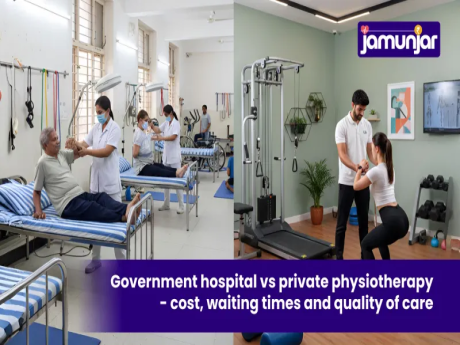
When you need physiotherapy in India, one of the first decisions you face is whether to go through a government hospital or book directly with a private clinic. The difference is not just about cost — it affects how quickly you are seen, how long each session lasts, and how closely your progress is monitored. Understanding the real-world distinction between government vs private physiotherapy can save you time, money, and unnecessary stress. To understand how physiotherapy itself helps recovery, see What Is Physiotherapy and How Does It Help?
This article breaks down both systems practically — referral pathways, session lengths, actual costs across Indian cities, and the circumstances where each option makes more clinical sense. Whether you are managing a sports injury, recovering from surgery, or dealing with chronic back pain, the comparison below will help you make a confident, informed choice.
Key Takeaways
- Government hospital physiotherapy in India is typically free or costs ₹0–₹50 per session but requires a doctor's referral and often involves waiting times of several weeks for an initial appointment.
- Private physiotherapy costs range from ₹500–₹2,000 per session in most Indian cities, with home visit sessions ranging from ₹800–₹3,000 depending on location and therapist experience.
- Private clinics allow self-referral for most musculoskeletal conditions, meaning you can book within days — sometimes the same day.
- Government hospitals are generally the safer starting point for post-surgical rehabilitation, neurological conditions, and trauma because of integrated medical oversight.
- Continuity of care — seeing the same physiotherapist at each visit — is more consistently available in private settings and is associated with better long-term outcomes.
- Your decision should weigh urgency, budget, condition complexity, and location — not just the upfront session cost.
How Government Hospital Physiotherapy Works in India
Referral Pathways and Eligibility
Physiotherapy in government hospitals is accessed through a structured referral system. You first see a doctor — usually in orthopaedics, neurology, or general medicine — who examines you and, if appropriate, refers you to the hospital's rehabilitation department. You cannot typically walk in and request physiotherapy directly.
This model aligns with public healthcare frameworks recommended by the World Health Organization, which emphasise coordinated care and clinical triage. In practice, government hospitals in India prioritise post-surgical patients, neurological conditions, trauma cases, and patients who cannot afford private care. If you fall into one of these categories, government physiotherapy is often the most appropriate starting point.
Typical Waiting Times and Session Limits
High patient volumes mean waiting times at government hospitals can stretch from two to six weeks for a first physiotherapy appointment in busy urban centres such as Mumbai, Delhi, or Chennai. In smaller district hospitals, the wait may be shorter but therapist availability can be inconsistent.
Once you are in the system, sessions are often 20–30 minutes long, and frequency is determined by therapist workload rather than ideal rehabilitation timelines. Research published through the National Centre for Biotechnology Information confirms that high patient load in public healthcare settings commonly limits both appointment duration and the continuity of follow-up care. Despite these constraints, treatment plans focus on essential exercises, patient education, and safe functional progression.
How Private Physiotherapy Works in India
Self-Referral, Insurance, and Out-of-Pocket Costs
One of the most significant practical advantages of private physiotherapy is self-referral. For most musculoskeletal complaints — back pain, knee pain, shoulder stiffness, sports injuries — you do not need a doctor's letter to book an appointment. This allows earlier intervention, which matters when pain is affecting your work or daily routine.
Important exception: if you have severe trauma, sudden unexplained weakness, numbness, or neurological changes, you should seek medical evaluation first before booking private physiotherapy. Red-flag symptoms always require a diagnosis before treatment begins. For more guidance, see 10 Signs Your Body Needs Physiotherapy.
Payment is usually out of pocket or partially reimbursed through health insurance. Mediclaim policies from insurers such as Star Health, HDFC Ergo, and Niva Bupa increasingly cover physiotherapy, though sub-limits of ₹5,000–₹25,000 per year are common. Always check your policy terms before booking.
Session Length and Scheduling Flexibility
Private clinics typically offer sessions of 45–60 minutes, giving the therapist time for proper reassessment, exercise progression, and patient education at every visit. Scheduling is flexible — early morning, evening, and weekend slots are commonly available, which matters if you cannot take time off work mid-week.
Home visit physiotherapy is also available through private providers in most major cities, which is practical for patients with mobility limitations, post-surgical restrictions, or demanding schedules. Treatment quality in home settings still depends entirely on proper clinical assessment and professional judgement — the location does not change the standard of care required.
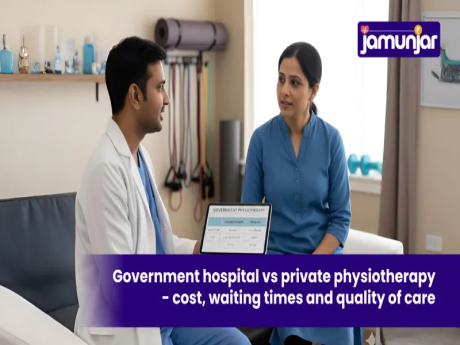
Cost Breakdown: Government vs Private Physiotherapy in India
Direct Session Costs
Cost is often the deciding factor for Indian patients. Here is a realistic comparison:
- Government hospital physiotherapy: Typically free or a nominal registration fee of ₹10–₹50 per session. Some AIIMS and large state hospitals charge a one-time OPD fee of ₹20–₹100 per visit.
- Private clinic physiotherapy: ₹500–₹2,000 per session in most Tier-1 cities (Mumbai, Delhi, Bengaluru, Hyderabad, Chennai). Tier-2 cities such as Pune, Ahmedabad, and Jaipur typically range from ₹400–₹1,200.
- Private home visit physiotherapy: ₹800–₹3,000 per session depending on city, distance, and therapist seniority.
- Typical treatment course: Most musculoskeletal conditions require 8–15 sessions. At private rates, this translates to ₹8,000–₹30,000 for a full course.
Indirect Costs and Time Off Work
Government hospital physiotherapy may appear free, but the hidden costs add up. Long waiting times for appointments, travel to a large government hospital (often far from residential areas), and multiple half-days taken off work can make the real cost comparable — or even higher — than a private clinic closer to home or office.
Consider these indirect costs when comparing:
- Transport: Auto, cab, or fuel costs per round trip, multiplied across 10–15 sessions.
- Lost income: For daily-wage workers or self-employed individuals, a half-day lost per session has a direct financial impact.
- Delayed recovery: A 4–6 week wait before starting treatment can allow a condition to worsen, potentially requiring more sessions overall.
When Private Care May Reduce Long-Term Costs
For stable musculoskeletal conditions — back pain, frozen shoulder, post-fracture rehabilitation — earlier access through a private clinic can lead to faster recovery, fewer total sessions, and reduced time away from work. Results are not universal and depend on the condition, patient adherence, and therapist quality. However, the economic logic of early intervention is well-established in rehabilitation research.
Comparing Patient Experience and Outcomes
Access to Specialised Services and Equipment
Private clinics may offer access to focused rehabilitation equipment — shockwave therapy, ultrasound, TENS, dry needling, or hydrotherapy — and therapists with specialised experience in sports injuries, neurological rehabilitation, or post-surgical recovery.
Government hospitals prioritise essential rehabilitation for a large and varied patient population. Major teaching hospitals such as AIIMS Delhi or KEM Mumbai do have strong rehabilitation departments with qualified specialists, but access depends on referral priority and availability.
As the National Library of Medicine notes, outcomes in physiotherapy are more strongly influenced by exercise quality, patient engagement, and adherence to a treatment plan than by equipment or technology alone. Choosing the right physiotherapy clinic matters more than the setting's price tag. For guidance on evaluating clinics, see How to Choose the Best Physiotherapy Clinic Near You.
Continuity of Care and Personalisation
Continuity of care — seeing the same physiotherapist at every session — is more reliably available in private settings. This matters because your therapist builds a detailed understanding of your movement patterns, pain triggers, and progress over time, enabling more precise adjustments to your programme.
In government hospitals, especially busy OPD departments, you may see a different therapist at each visit or be supervised by a junior staff member under indirect oversight. This does not make care ineffective, but it can affect the personalisation of your programme. Research published on NLM confirms that individualised, progressive physiotherapy programmes are associated with better functional outcomes than generic or fixed protocols — particularly for long-term musculoskeletal conditions.
How to Decide What Is Right for You
When Government Hospital Physiotherapy Is the Better Choice
- You have had recent surgery, trauma, or a neurological event (stroke, spinal cord injury) and need integrated medical oversight.
- Your condition is complex or high-risk and benefits from a multidisciplinary team — physicians, physiotherapists, occupational therapists — working together.
- You genuinely cannot afford private care and need ongoing rehabilitation over many months.
- You already have an established doctor at a government hospital who is managing your case.
When Private Physiotherapy Is the Better Choice
- You have a stable musculoskeletal condition — back pain, neck pain, shoulder pain, knee pain — without red-flag symptoms.
- You need an appointment within days rather than weeks to prevent your condition from worsening or to return to work quickly.
- You want longer sessions, a consistent therapist, and a personalised exercise programme.
- You have health insurance that partly covers physiotherapy, reducing the out-of-pocket cost significantly.
- Mobility or time constraints make a clinic near your home or office — or a home visit — the only practical option.
Not sure whether physiotherapy is even the right first step? This comparison can help: Physiotherapy vs Chiropractor vs Orthopaedic: Who Should You See First?
Budget, Location, and Practical Realities
There is no single right answer. Budget constraints, distance from a facility, work commitments, and the nature of your condition all influence the decision. An open conversation with a qualified physiotherapist — even a brief initial consultation — will help you understand your options and set realistic expectations. If you are dealing with chronic pain and wondering whether physiotherapy is a better long-term solution than medication, see Physiotherapy vs Painkillers: Safer Long-Term Relief.
Frequently Asked Questions
Is government hospital physiotherapy completely free in India?
In most government hospitals, physiotherapy is either free or costs a nominal OPD registration fee of ₹10–₹100. Large institutes such as AIIMS charge a small fee per visit, while district and taluka hospitals are typically free. The financial cost per session is minimal, but indirect costs — travel, time off work, and waiting — should be factored into your decision.
How much does private physiotherapy cost in India per session?
Private physiotherapy costs vary by city and clinic. In Tier-1 cities (Mumbai, Delhi, Bengaluru, Hyderabad, Chennai), expect to pay ₹500–₹2,000 per session. In Tier-2 cities, sessions typically cost ₹400–₹1,200. Home visits are higher, ranging from ₹800–₹3,000 depending on distance and therapist seniority. A full treatment course of 10–15 sessions in a private clinic generally costs ₹8,000–₹30,000.
Do I need a doctor's referral for private physiotherapy in India?
For most musculoskeletal conditions — back pain, neck pain, shoulder or knee pain — you can self-refer to a private physiotherapy clinic without a doctor's letter. However, if you have severe trauma, sudden neurological symptoms, unexplained pain, or have recently had surgery, a medical evaluation should come first. When in doubt, call the clinic and describe your symptoms — a good physiotherapist will tell you if you need to see a doctor before booking.
How long is the waiting time for physiotherapy in a government hospital?
Waiting times vary widely. In large urban government hospitals, the wait for a first physiotherapy appointment can be two to six weeks or longer during busy periods. Smaller district hospitals may have shorter waits but less consistent therapist availability. Once in the system, follow-up appointments are also subject to scheduling capacity rather than clinical ideal timelines.
Does health insurance in India cover private physiotherapy?
Many Indian health insurance policies — including plans from Star Health, HDFC Ergo, Niva Bupa, and Care Health — cover physiotherapy, either as part of hospitalisation benefits or as an outpatient add-on. Sub-limits typically range from ₹5,000–₹25,000 per policy year. Always review your policy documents and confirm with your insurer before beginning treatment, as coverage terms vary significantly between plans.
Which is better for post-surgical rehabilitation — government or private physiotherapy?
For post-surgical rehabilitation, government hospitals have the advantage of integrated medical oversight — your surgeon, physician, and physiotherapist are in the same facility and can coordinate directly. This is particularly important after major joint replacement, spinal surgery, or neurological procedures. Private physiotherapy is a strong option once the acute post-surgical phase is complete and you need ongoing, personalised exercise progression closer to home.
Can I switch from government to private physiotherapy mid-treatment?
Yes, and this is more common than people realise. Many patients begin rehabilitation at a government hospital and then transition to a private clinic once they are medically stable and need more frequent or longer sessions. Ask your government hospital physiotherapist for a brief summary of your treatment plan and exercise programme — a private physiotherapist can continue from where you left off without starting from scratch.
Conclusion
Both government and private physiotherapy have an important place in India's healthcare system. Government hospitals provide safe, affordable, medically integrated care for complex and post-surgical cases — provided you can manage the waiting times and scheduling constraints. Private physiotherapy offers faster access, longer sessions, consistent therapist continuity, and greater flexibility — at a higher direct cost that varies significantly by city and clinic.
The right choice depends on your specific condition, urgency, budget, and practical circumstances. If you are unsure where to start, a brief conversation with a qualified physiotherapist can clarify your options quickly. And if your pain is affecting your energy, weight, or metabolic health — a situation many patients overlook — explore the Metabolic Reset Program to support your recovery from the inside out.
Medical Disclaimer
This article is for educational purposes only. It does not replace professional medical advice, diagnosis, or treatment. Physiotherapy outcomes vary between individuals. Always consult a qualified healthcare professional before starting, stopping, or changing any treatment or exercise programme.
The article is written by

He specializes in comprehensive assessment, pre- and post-rehabilitation, and advanced management of musculoskeletal, neurological, and critical cardio-respiratory conditions.