

Physiotherapy After Knee Replacement: Week-by-Week TKR Recovery Guide
Physiotherapy after knee replacement is the single most important factor in how well you recover. This guide walks you through a clinically informed week-by-week TKR rehab timeline, compares clinic vs home-based options, and helps you get back on your feet safely.
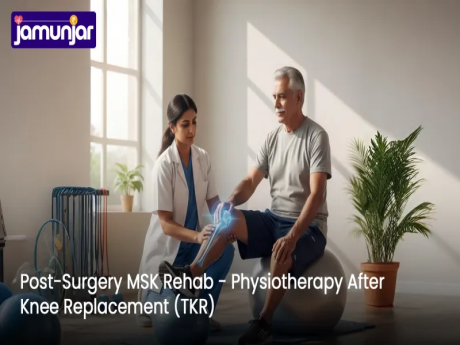
Physiotherapy after knee replacement is not optional — it is the difference between a knee that works and one that stiffens, aches, and limits your life. A Total Knee Replacement (TKR) replaces the damaged joint surfaces, but it does nothing for the surrounding muscles, tendons, and movement patterns. That work is yours to do, with the right guidance.
Whether you have just returned home from surgery or are planning your TKR in the coming weeks, this guide gives you a clear, evidence-based picture of what postoperative rehabilitation physiotherapy looks like — phase by phase — and how to choose between clinic-based and home-based options in India.
Key Takeaways
- Start physiotherapy within 24 hours of surgery — early mobilisation is recommended by NICE guidelines and significantly reduces stiffness.
- The TKR rehab timeline runs from 0–2 weeks (early mobilisation) through 2–6 weeks (strength gains) to 6–12 weeks (functional training).
- Full functional recovery typically takes 3–6 months; bone and tissue remodelling continues for up to 12 months.
- Home-based physiotherapy is clinically as effective as clinic-based rehab when supervised by a trained physiotherapist.
- Quadriceps strength is the single biggest predictor of long-term knee function after TKR — do not skip strengthening exercises.
- Patients in Mumbai, Delhi, and Hyderabad can book a registered physiotherapist at home through the Jamunjar app.
Why Physiotherapy Is Essential After Knee Replacement
Surgery repairs the joint; physiotherapy restores your life. After a TKR, the muscles around your knee — particularly the quadriceps — have been cut through, stretched, and immobilised. Without targeted rehabilitation, these muscles waste rapidly, the knee stiffens, and your risk of complications such as deep vein thrombosis and falls increases sharply.
NICE guidelines explicitly recommend that physiotherapy begin as early as possible after surgery, ideally with a self-directed exercise programme initiated before you are discharged from hospital. Evidence confirms that structured physiotherapy improves physical function and range of motion in the short and medium term — and protects your new joint for years to come.
What Physiotherapy Addresses After TKR
Post-operative knee replacement rehab targets four interconnected problems:
- Strength loss: Quadriceps, hamstrings, and hip stabiliser muscles weaken significantly after surgery. Targeted strengthening restores the muscular support the knee needs to function safely.
- Restricted mobility: Gentle, progressive range-of-motion exercises prevent scar tissue from forming in ways that permanently limit knee bending and straightening. A target of 90° of flexion by week 6 is a common clinical benchmark.
- Abnormal gait: Pain and weakness cause compensatory walking patterns that stress the hip, lower back, and opposite knee. Gait retraining corrects these early.
- Swelling and pain: Elevation, guided movement, and manual techniques reduce post-surgical inflammation, making it easier to exercise consistently.
Not sure whether physiotherapy is right for your situation? Read our overview on 10 Signs Your Body Needs Physiotherapy.
Week-by-Week TKR Rehab Timeline
Recovery after knee replacement surgery is not linear, but it does follow a broadly predictable arc. Individual outcomes vary based on age, overall health, surgical technique, and — critically — how consistently you do your exercises.
Weeks 0–2: Early Mobilisation
The first two weeks are about pain control, swelling reduction, and waking up the muscles. You will still be relying on a walker or crutches, and that is expected.
- Ankle pumps and heel slides: Started within hours of surgery to improve circulation and prevent blood clots.
- Quad sets and straight leg raises: Activate the quadriceps without bending the knee, building the foundation for everything that follows.
- Assisted knee flexion: Gentle bending and straightening, progressing toward 60–70° of flexion by the end of week 2.
- Short walking sessions: 3–4 times daily with a walking aid, gradually increasing distance.
- Ice and elevation: Applied for 15–20 minutes after each exercise session to manage swelling.
Physiotherapy delivered by a professional in your home environment is especially valuable at this stage — it reduces the risk of falls during transfers and helps you manage exercises safely when discomfort is at its peak.
Weeks 2–6: Strength and Mobility Gains
By week 2, the initial wound healing is underway and your physiotherapist will begin pushing range of motion and strength more assertively. The goal is 90° of knee flexion by week 6 and the ability to walk without aids on flat ground.
- Mini squats and step-ups: Begin building functional leg strength with body weight.
- Sit-to-stand training: A critical functional milestone — practised daily from a firm chair of appropriate height.
- Progressive resistance exercises: Resistance bands and light weights are introduced to challenge the quadriceps and hamstrings.
- Walking programme: Distance and duration increased progressively; dependency on walking aids reduced.
- Stationary cycling: Often introduced around week 4 — low-impact and highly effective for regaining range of motion.
Patients who maintain consistent sessions during this phase — whether through a home physiotherapy app or an organised plan provided by a physiotherapy centre in Mumbai — show measurably better outcomes at the 3-month mark.
Weeks 6–12: Advanced Functional Training
This is when rehabilitation becomes genuinely goal-oriented. You are working toward full independence in daily activities and building the endurance your knee needs for long-term protection.
- Balance and proprioception training: Single-leg stands, wobble board exercises, and dynamic weight shifts to reduce fall risk.
- Stair climbing and descending technique: Taught with correct form — leading with the stronger leg going up, the operated leg going down.
- Longer walking and outdoor activity: Building toward 30+ minutes of continuous walking by week 10–12.
- Swimming and hydrotherapy: Excellent low-impact options once wound healing is complete, typically from week 6–8.
Patients across India — including those receiving physiotherapy at home in Hyderabad — consistently report improved confidence and function when rehabilitation extends through the full 12-week phase. For a comparable recovery roadmap, see our guide on Physiotherapy After Total Hip Replacement.
In-Clinic vs Home Physiotherapy After TKR: Which Is Right for You?
This is one of the most common questions patients ask after knee replacement surgery — and the honest answer is that both can work equally well, provided the right conditions are met.
A peer-reviewed study found that a structured home rehabilitation programme is as effective as traditional clinic physiotherapy after TKR, provided there is appropriate supervision and progressive exercise prescription. The key word is "structured" — informal exercise without guidance does not produce the same results.
Comparing Clinic and Home Physiotherapy
- Clinic-based physiotherapy: Access to specialist equipment (ultrasound, interferential therapy, parallel bars), direct supervision, and peer support. Better suited for patients with complex post-surgical presentations or significant co-morbidities.
- Home physiotherapy: Exercises performed in your actual living environment, which means functional gains transfer more directly to daily life. Eliminates transport challenges — important in weeks 0–4 when travel is difficult and risky. Strong option for patients in major cities through services like physiotherapy at home in Delhi.
Many patients in India use a hybrid approach — attending a clinic for initial assessment and equipment-based sessions, then switching to home visits for ongoing rehabilitation. This balances access to specialist resources with the convenience and consistency that home care provides.
For a broader look at how physiotherapy compares to other treatment paths, read Physiotherapy vs Chiropractor vs Orthopaedic: Who Should You See First?
Long-Term Exercises for Full Recovery and Joint Protection
Formal physiotherapy ends, but exercise does not. Patients who maintain a structured exercise routine beyond the 12-week mark continue to improve function up to a year post-surgery — and significantly reduce the risk of joint wear, falls, and secondary musculoskeletal problems.
Exercises to Continue Beyond Week 12
- Quadriceps strengthening: Leg press, terminal knee extensions, and wall squats. The quadriceps are the primary stabilisers of the knee — maintaining their strength is non-negotiable.
- Hamstring strengthening: Leg curls and bridge variations to support knee bending and dynamic stability.
- Balance and proprioception: Single-leg stands (progressing to eyes closed), lateral step exercises, and low-level agility drills to reduce fall risk.
- Stair training: Continue practising correct stair technique — it is a daily functional necessity for most Indian households.
- Low-impact cardio: Walking, swimming, and cycling maintain cardiovascular health and support healthy body weight, which directly reduces load on the replaced knee.
Staying on track with a long-term programme — whether through regular home visits or physiotherapy at home in Mumbai — protects your investment in surgery and keeps compensatory injuries at bay. If pain persists beyond the expected recovery window, read our guide on Physiotherapy vs Painkillers: Safer Long-Term Relief.
Frequently Asked Questions
How soon after knee replacement surgery should I start physiotherapy?
Physiotherapy typically begins within 24 hours of surgery, while you are still in hospital. Simple exercises such as ankle pumps and quad sets are started almost immediately to prevent blood clots and begin muscle activation. NICE guidelines recommend that a self-directed exercise programme is initiated before discharge. Your physiotherapist will assess your specific condition and adjust the pace accordingly.
How long does full recovery from TKR take?
Most patients achieve independent daily functioning within 6–12 weeks. However, full recovery — including complete muscle strength, confidence on stairs, and unrestricted walking — typically takes 3–6 months. Bone and soft tissue remodelling around the new joint continues for up to 12 months post-surgery. Consistent physiotherapy throughout this period produces the best long-term outcomes.
Is home physiotherapy safe after knee replacement surgery in India?
Yes — research confirms that home-based rehabilitation is as effective as clinic physiotherapy after TKR when supervised by a trained physiotherapist. In the Indian context, home physiotherapy also removes transport barriers during the early recovery period when travel is uncomfortable and risky. Services such as those available in Mumbai, Delhi, and Hyderabad through the Jamunjar app provide registered physiotherapists who follow structured, evidence-based protocols.
What is a normal range of motion target after TKR?
Clinical guidelines generally target 0° of full extension (the knee straightens completely) and at least 90° of flexion by week 6, progressing toward 120° or more by 3 months. Achieving and maintaining these ranges requires consistent daily exercise. If you are struggling to meet these benchmarks, contact your physiotherapist promptly — delayed intervention makes stiffness harder to reverse.
Can I do physiotherapy exercises at home without a physiotherapist visiting?
A supervised home exercise programme — where a physiotherapist designs the plan, demonstrates the exercises, and monitors your progress — is far more effective than self-managed exercises alone. While independent practice between sessions is essential, the initial prescription and periodic reassessment must come from a qualified professional. Unsupervised exercise after TKR carries risk of overloading the joint or developing compensatory movement patterns.
When can I climb stairs normally after knee replacement?
Most patients can manage one step at a time on stairs within 2–3 weeks of surgery, using a handrail for support. A more natural stair-climbing pattern — alternating legs — is typically achievable by weeks 8–12, depending on strength and confidence. Your physiotherapist will introduce stair training progressively and ensure you are using correct technique before you attempt stairs independently.
Does diet affect recovery from knee replacement surgery?
Absolutely. Adequate protein intake supports muscle repair, and anti-inflammatory foods can help manage post-surgical swelling. A registered dietitian can advise on nutrition that complements your rehabilitation. Body weight management is also clinically significant — every kilogram of excess weight adds approximately 3–4 kg of force on the knee joint, directly affecting the longevity of the implant. If overall metabolic health is a concern alongside your recovery, explore the Metabolic Reset Program.
Conclusion
Recovery after knee replacement surgery is a commitment — but it is a commitment with a reliable, well-mapped return. Physiotherapy after knee replacement is the single most evidence-backed intervention you can invest in after your surgery. Done consistently, it restores strength, mobility, and independence; done poorly or skipped, it leaves you with a new joint in a weakened, stiff frame.
Whether you choose a clinic, a home visit service, or a combination of both, the priority is the same: supervised, progressive, and consistent rehabilitation. Use the week-by-week framework in this guide as your reference, track your range-of-motion milestones, and communicate any setbacks to your physiotherapist early.
And if managing your overall metabolic health — weight, energy levels, inflammation — feels like the missing piece in your recovery, consider looking at the Metabolic Reset Program, designed to support long-term musculoskeletal and metabolic wellbeing.
For a broader look at how physiotherapy can help beyond knee replacement, read Manual Therapy, Electrotherapy or Exercise Therapy: Choosing the Right Physio Treatment and Post-ACL Reconstruction Physiotherapy: A Complete Recovery Guide.
Medical Disclaimer
This article is for educational purposes only. It does not replace professional medical advice, diagnosis, or treatment. Always consult a qualified doctor or physiotherapist before starting, stopping, or changing any treatment for pain or medical conditions. Exercises should only be started after assessment and guidance from a qualified physiotherapist.
References
- F Fatoye, G Yeowell, J M Wright, T Gebrye. Does home-based rehabilitation work as well as physiotherapy after knee replacement? PubMed [Internet]. 2021 [Accessed Jan 2026]. Available from: https://pubmed.ncbi.nlm.nih.gov/33554305/
- National Institute for Health and Care Excellence (NICE). Quality Statement 5: Postoperative rehabilitation [Internet]. NICE; [Accessed Jan 2026]. Available from: https://www.nice.org.uk/guidance/qs206/chapter/Statement-5-Postoperative-rehabilitation
- National Institute for Health and Care Excellence (NICE). Total hip replacement and total knee replacement in adults (NG157) [Internet]. NICE; [Accessed Jan 2026]. Available from: https://www.nice.org.uk/guidance/ng157
- National Institute for Health and Care Research (NIHR). Knee replacements: Home-based rehabilitation as effective as physiotherapy [Internet]. NIHR; [Accessed Jan 2026]. Available from: https://evidence.nihr.ac.uk/alert/knee-replacements-home-based-rehabilitation-as-effective-physiotherapy/
The article is written by

He specializes in comprehensive assessment, pre- and post-rehabilitation, and advanced management of musculoskeletal, neurological, and critical cardio-respiratory conditions.